

Blog
Slat Walls Versus Wallpaper: Which Finish Fits?

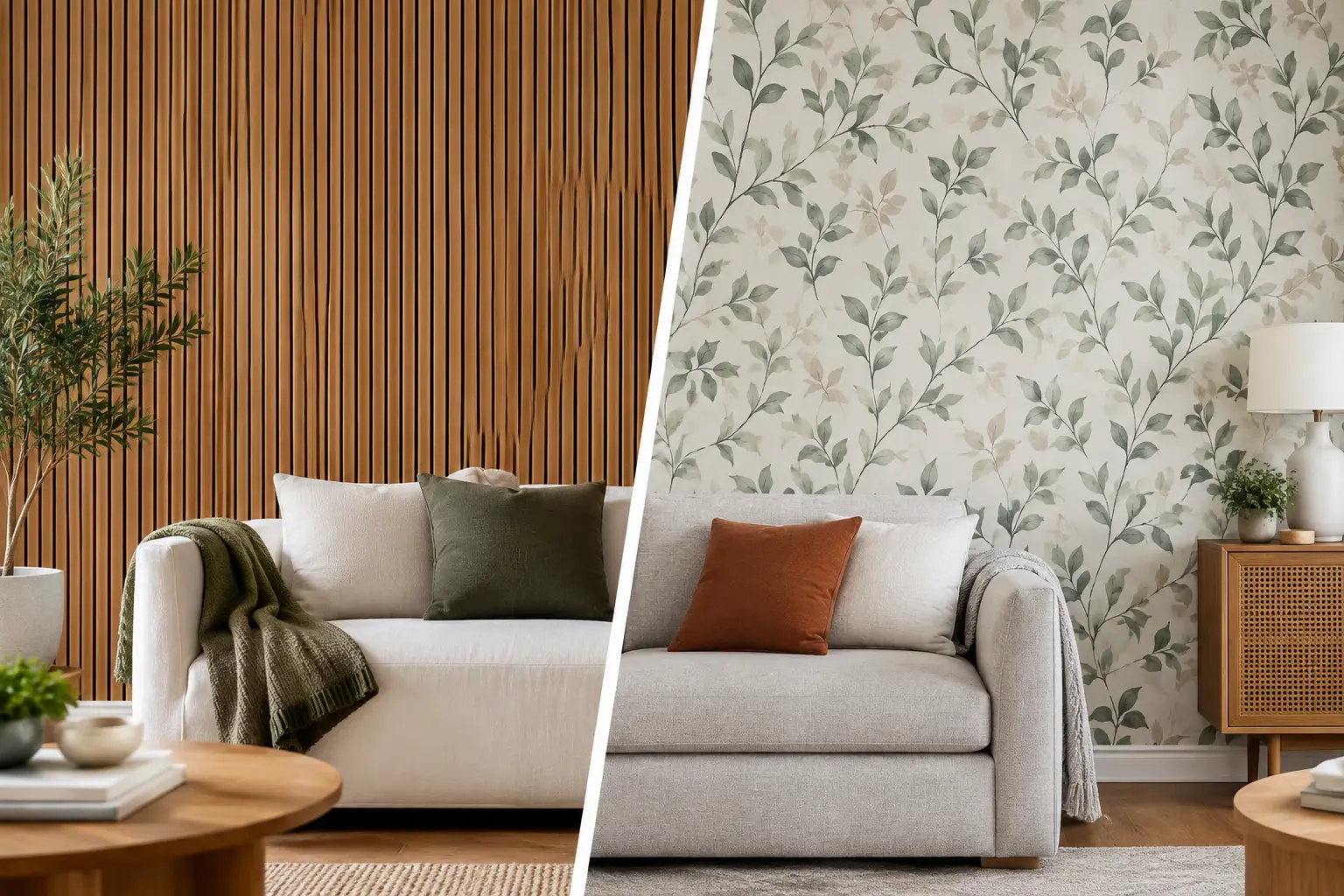
A blank wall can make an otherwise beautiful room feel unfinished. Yet the right surface treatment can change its proportions, warmth, and even the way conversation carries through the space. When considering slat walls versus wallpaper, the better choice is not simply about pattern versus texture. It is about how you want the room to look, feel, perform, and age.
Wallpaper remains a compelling way to introduce color, illustration, and personality with relatively little construction. Acoustic slat wall panels bring architectural depth, a timber-inspired finish, and practical sound-softening qualities to interiors that need more than decoration. Both can create a memorable result. The distinction lies in what the wall is being asked to do.
Slat Walls Versus Wallpaper: Start With Room Performance
Wallpaper is primarily a visual finish. It can establish a mood quickly, whether that means a tailored grasscloth look in a bedroom, a dramatic botanical print in a powder room, or a quiet textured neutral behind a dining table. It is especially effective when the goal is to bring a clear decorative point of view into a space without changing its physical structure.
Slat wall panels are more architectural. Their vertical rhythm draws the eye upward, giving a room a stronger sense of height and considered proportion. The depth between each slat creates natural shadow lines that shift gently throughout the day, adding dimension that a flat wallcovering cannot quite replicate.
That difference matters in modern homes and commercial environments, where clean-lined furniture and open-plan layouts can sometimes feel visually sparse. A warm oak-inspired slat finish behind a television, reception desk, bed, or dining banquette gives the room a focal point without relying on a busy print. It feels intentional, composed, and quietly luxurious.
When wallpaper has the visual advantage
Wallpaper offers a broader range of expressive possibilities. It can introduce florals, murals, geometric prints, heritage motifs, or saturated color in ways slat panels are not intended to do. For a small guest bathroom, a children’s room, or a feature wall designed around a particular pattern, wallpaper may be the more creative choice.
It can also be a smart complement to slat panels. Rather than treating the two finishes as rivals, designers often use wallpaper to add personality in one zone and slatted texture to create calm and structure in another. The best interiors balance visual interest with places for the eye to rest.
Consider Acoustics Before Choosing a Finish
This is where the practical difference becomes significant. Wallpaper does not meaningfully improve a room’s acoustics. Thick wallcoverings may slightly soften a hard surface, but they will not address noticeable echo, speech clarity, or the clatter that builds up in rooms with tile, glass, concrete, and open ceilings.
Acoustic slat wall panels are designed to help absorb sound. Typically, the timber-look slats sit over an acoustic backing, which helps reduce reflected sound within the room. The result is often a space that feels calmer and more comfortable, particularly where several people are talking at once.
For a family living room with a large television, a home office used for calls, or an open-plan dining area, that added sound control can be a meaningful benefit. In hospitality and workplace settings, it can support a more polished guest or client experience. Restaurants, meeting rooms, reception areas, and collaborative offices all benefit when people can hear one another without raising their voices.
Acoustic panels are not a substitute for a complete acoustic design in highly specialized environments. Room size, flooring, ceilings, windows, and furniture all influence sound. But for everyday interiors, a slat wall can provide a valuable performance layer while delivering a refined feature finish.
Durability and Daily Maintenance
A wall finish should suit the reality of the room, not just its design brief. Wallpaper can last beautifully for years when professionally installed and protected from excessive moisture, direct abrasion, and sun exposure. High-quality washable options are available, but seams, corners, and edges remain more vulnerable in hard-working areas.
In a busy hallway, behind dining chairs, near a reception counter, or in a home with young children and pets, wallpaper may show scuffs or lifting edges over time. Repairs can be difficult if the original batch is no longer available, as a new section may not perfectly match an aged or sun-faded installation.
Slat wall panels are generally the stronger option for areas that need a durable, low-maintenance finish. Their engineered construction offers the warmth of wood-inspired design without the routine sanding, sealing, or refinishing associated with traditional timber cladding. A light dusting or gentle wipe is usually all that is needed to keep the surface looking considered.
There is still a practical caveat: interior acoustic slat panels should be chosen for appropriate indoor locations. For outdoor applications or weather-exposed walls, use purpose-designed composite exterior cladding rather than assuming an interior decorative panel will withstand sun and rain. Selecting the right product for its environment protects both the finish and the investment.
Installation Changes the Calculation
Wallpaper installation can be fast in a simple room, but the final result depends heavily on wall preparation and precision. Walls need to be smooth, clean, dry, and properly primed. Pattern matching, trimming around outlets, and handling corners demand care, particularly with bold or detailed designs. Imperfections in the substrate can remain visible beneath the paper.
Slat panels involve a different kind of preparation. They are typically installed as modular sections, making it easier to create a continuous feature wall, media wall, ceiling detail, or custom paneling layout. Panels can be cut around outlets and architectural elements, while trims, corner edges, and end slats create a finished appearance at visible boundaries.
For confident DIY renovators, the panel format can feel more straightforward than working with pasted wallpaper and matching repeats. For larger projects, a contractor or installer can achieve a crisp result efficiently. The key is measuring carefully from the beginning, accounting for electrical points, and planning how the panel rhythm will meet doors, ceilings, and adjacent walls.
If you are renovating a rental property or expect to change the design frequently, wallpaper may be easier to justify as a shorter-term decorative decision. If you are creating a long-lasting focal point in a home, office, or hospitality setting, slat panels often offer a more permanent and elevated solution.
Cost Is About More Than the Initial Price
Wallpaper can have a lower entry cost, especially for a modest feature wall. However, the material cost is only part of the picture. Professional hanging, wall repairs, primer, adhesive, and potential future replacement all affect the final figure. Premium wallcoverings can also become expensive quickly when pattern repeats require extra material.
Slat wall panels may require a greater upfront investment, particularly when covering a large surface. Yet they combine decorative impact with durability, texture, and acoustic benefits. That broader value can make them a strong choice for spaces where comfort, perceived quality, and long-term appearance matter.
For commercial projects, consider the cost of disruption as well. A finish that resists daily wear and requires minimal upkeep can be worth more than one that needs frequent touch-ups or replacement. In a hospitality venue or customer-facing office, the wall is part of the experience your guests or clients take away with them.
Which Finish Belongs in Your Space?
Choose wallpaper when the room needs pattern, color, or a highly specific decorative statement. It works beautifully in lower-impact spaces where sound control is not a priority and where a flat, artful surface suits the overall scheme.
Choose acoustic slat panels when you want warmth, depth, and a more architectural finish, especially in living rooms, bedrooms, offices, reception areas, restaurants, and meeting spaces. They are particularly compelling where a wall needs to improve the atmosphere as well as the aesthetic.
The most satisfying choice is the one that makes the room feel better to live or work in. A considered wall surface should not merely fill empty space. It should bring texture to the eye, calm to the ear, and a sense that every detail belongs.