

Blog
Choosing the Right End Slat Finishing Solution

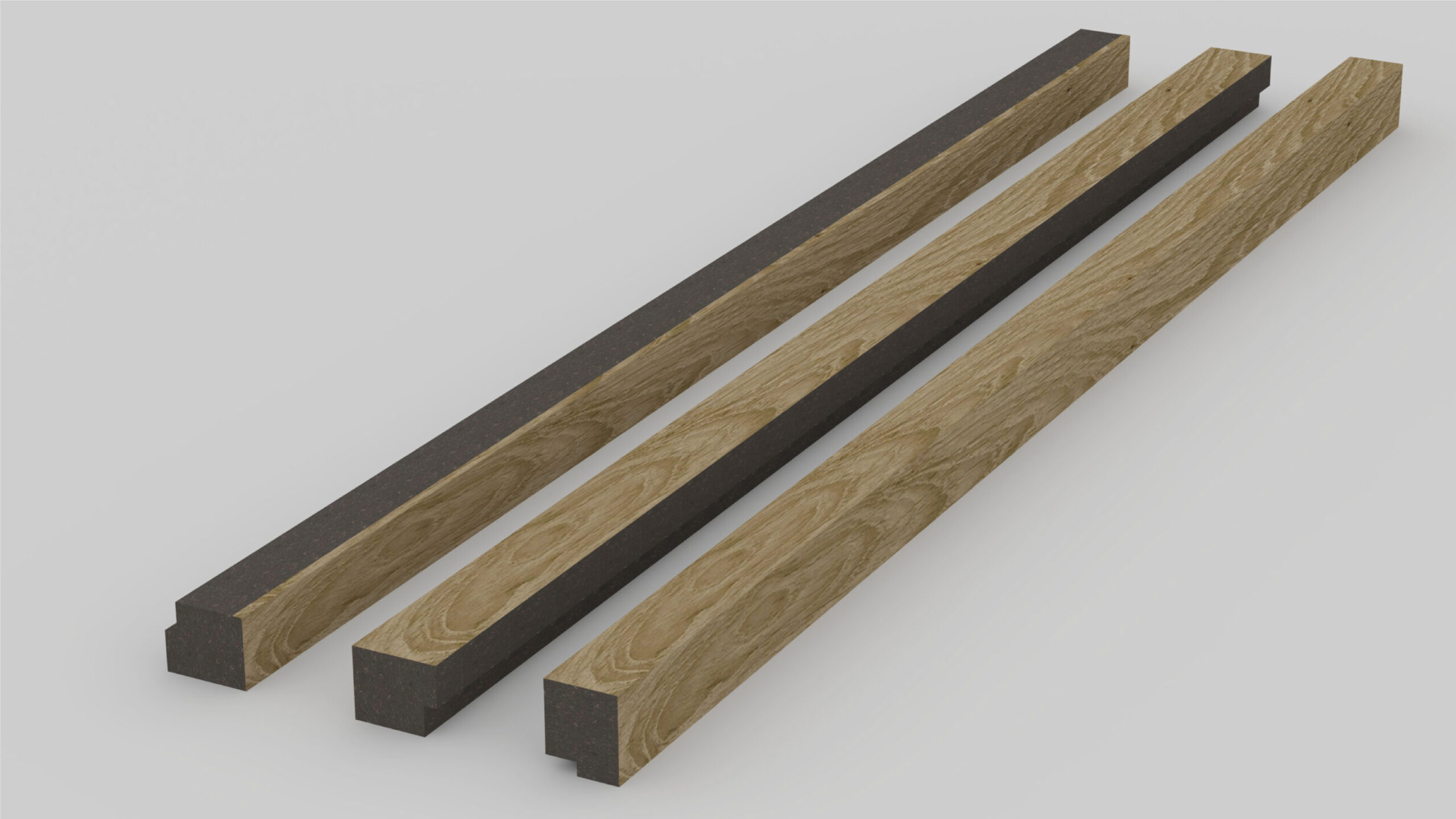
A slat wall can look exceptional across an entire room, then lose some of its impact at the final exposed edge. That last detail matters more than most people expect. The right end slat finishing solution turns a panel installation from visibly assembled to fully resolved, giving the design a clean, intentional finish that feels worthy of the space around it.
For homeowners, designers, and contractors, this is rarely just about hiding a cut edge. It is about preserving the visual rhythm of the slats, keeping the finish refined from every angle, and making sure the installation reads as premium rather than pieced together. In a living room, reception area, boardroom, or hospitality setting, exposed ends are often exactly where the eye lands.
Why an end slat finishing solution changes the final result
Acoustic slat panels are designed to bring warmth, texture, and architectural order to a surface. Their strength lies in repetition – the steady spacing, the timber-inspired face, and the contrast between slat and backing. When the edge is left unresolved, that rhythm can stop abruptly. You may see substrate, fixing lines, or an unfinished transition that interrupts the look.
A well-chosen end slat finishing solution creates continuity. It frames the panel neatly, gives the slatted profile a proper stopping point, and helps the installation feel custom rather than standard. This is especially valuable in open-plan interiors, feature TV walls, headboards, office meeting rooms, and hospitality spaces where finishes are expected to hold up under close attention.
There is also a practical side. Finished edges can help protect vulnerable panel ends from knocks, reduce the visual impact of slight site irregularities, and support a more professional handover. For trade professionals, that detail can be the difference between a good job and a memorable one.
Where exposed slat edges show up most often
Not every installation needs the same edge treatment. A full wall that dies neatly into a corner has different requirements from a floating feature panel or a ceiling detail. The best end slat finishing solution depends on where the panel starts, where it ends, and how visible that edge will be once the room is furnished and in use.
Feature walls are one of the most common scenarios. If the panel stops before the full width of the wall, both vertical outer edges become part of the design. The same applies to media walls, bedroom feature panels behind a bed, and decorative sections in entryways.
Ceilings introduce another layer. An exposed end on a slatted ceiling is often seen from below and at a distance, so the finish needs to look crisp without feeling visually heavy. In commercial interiors, such as meeting rooms, restaurants, and reception areas, these transitions are often more noticeable because lighting tends to emphasize linear surfaces.
Then there are partial-height applications, bulkheads, wrapped columns, and joinery-adjacent details. In each case, the edge treatment should support the architecture around it rather than compete with it.
What to look for in an end slat finishing solution
The first consideration is visual match. A finishing component should feel like part of the original panel system, not an afterthought. That means paying attention to profile, tone, texture, and the way the piece relates to the slat face. If the finish is too flat, too bulky, or slightly off in color, the edge can start to draw attention for the wrong reasons.
The second is proportion. Slatted designs are all about rhythm and scale. A finishing solution should respect that rhythm. In some spaces, a minimal edge detail works best because it lets the slat face remain dominant. In other interiors, especially where the installation is intended to read as bold architectural cladding, a more defined trim can add presence.
Material performance matters too. In high-traffic areas, edge components should be durable enough to handle day-to-day contact. In humid or more demanding environments, you want a finish that supports the practical strengths of the panel system rather than compromising them.
Ease of installation is another real factor. Designers may focus on the final look, but contractors know that a good finishing solution should also reduce fuss on site. Cleaner alignment, simpler fixing, and a more predictable result save time and improve consistency across larger projects.
End slat finishing solution options and when each works best
Some projects call for a matching end slat that continues the panel language right to the edge. This approach works well when you want the finish to feel integrated and quiet. It preserves the slatted look and is often ideal for residential feature walls, bedrooms, and elegant office interiors where subtlety matters.
In other settings, trims or corner profiles may be the better answer. These can help create a sharper architectural stop, especially where panels meet another material or wrap around a junction. They are often useful in commercial spaces, around reveals, or anywhere the panel edge needs a little more protection.
There are also situations where the smartest choice depends on viewing distance. A close-up residential application may benefit from a highly coordinated edge detail because people will notice every transition. A larger hospitality or office installation may prioritize speed, consistency, and durability, provided the overall effect remains polished.
This is why there is rarely one universal answer. The right end slat finishing solution is the one that suits the scale of the room, the visibility of the edge, the panel design, and the expectations of the client.
Design details that make the edge feel intentional
A premium finish is not created by the panel alone. It comes from how every adjoining detail is handled. Edge treatment should relate to nearby skirtings, ceiling lines, corners, lighting, and built-in cabinetry. If those elements are minimal and contemporary, the finishing approach should follow the same logic. If the room has stronger framing details, the slat edge can carry slightly more definition.
Lighting deserves special attention. Linear lighting, wall washers, and side light can exaggerate even minor inconsistencies along an exposed edge. That makes precision more important, not less. In these conditions, a proper finishing solution helps maintain the calm, tailored appearance that slatted surfaces are known for.
Color also changes perception. Darker finishes tend to make edge shadows feel deeper and more dramatic, which can be striking when controlled well. Lighter wood-inspired tones often call for especially neat transitions because the eye reads them as softer and more continuous.
Why skipping the finishing detail can be costly
It is tempting to focus budget and attention on the main panel surface, especially when the room is coming together quickly. But an unfinished or poorly finished edge has a way of lowering the perceived value of the whole installation. The space may still look good at first glance, yet under closer inspection it can feel incomplete.
That matters in homes where clients are investing in long-term enjoyment, and even more so in commercial environments where finishes contribute to brand perception. A reception wall, restaurant backdrop, or meeting room feature should communicate care and quality from every angle.
There is also a maintenance consideration. Edges that are not properly resolved can be more vulnerable to wear, accidental contact, or grime settling into awkward gaps. A cleaner finish is usually easier to live with over time.
Making the right choice for residential and commercial spaces
For residential interiors, the most successful approach is often the one that feels calm and cohesive. The edge should support the warmth of the panel and the overall atmosphere of the room. Bedrooms, lounges, hallways, and home offices typically benefit from finishing details that are refined rather than overly pronounced.
Commercial spaces often require a slightly different balance. Durability, repeatability, and installation efficiency may carry more weight, especially across larger areas. But the visual standard still needs to remain high. In premium offices, retail environments, and hospitality settings, edge details should reinforce the sense of a considered architectural finish.
That is where a specialist range makes a real difference. When panels, trims, corner edges, and end slat components are designed to work together, the process becomes more reliable and the result more elevated. Brands such as Inspiration Wood understand that customers are not simply buying wall panels. They are shaping the atmosphere of a space, and the final edge is part of that experience.
The best interiors always look effortless, but they rarely happen by accident. If your slatted surface will have any visible exposed edge, give that detail the same attention you give the panel itself. The right end slat finishing solution does not shout for attention. It simply makes the whole space feel complete.