

Blog
Slat Panels vs Painted Walls: Which Fits Best?

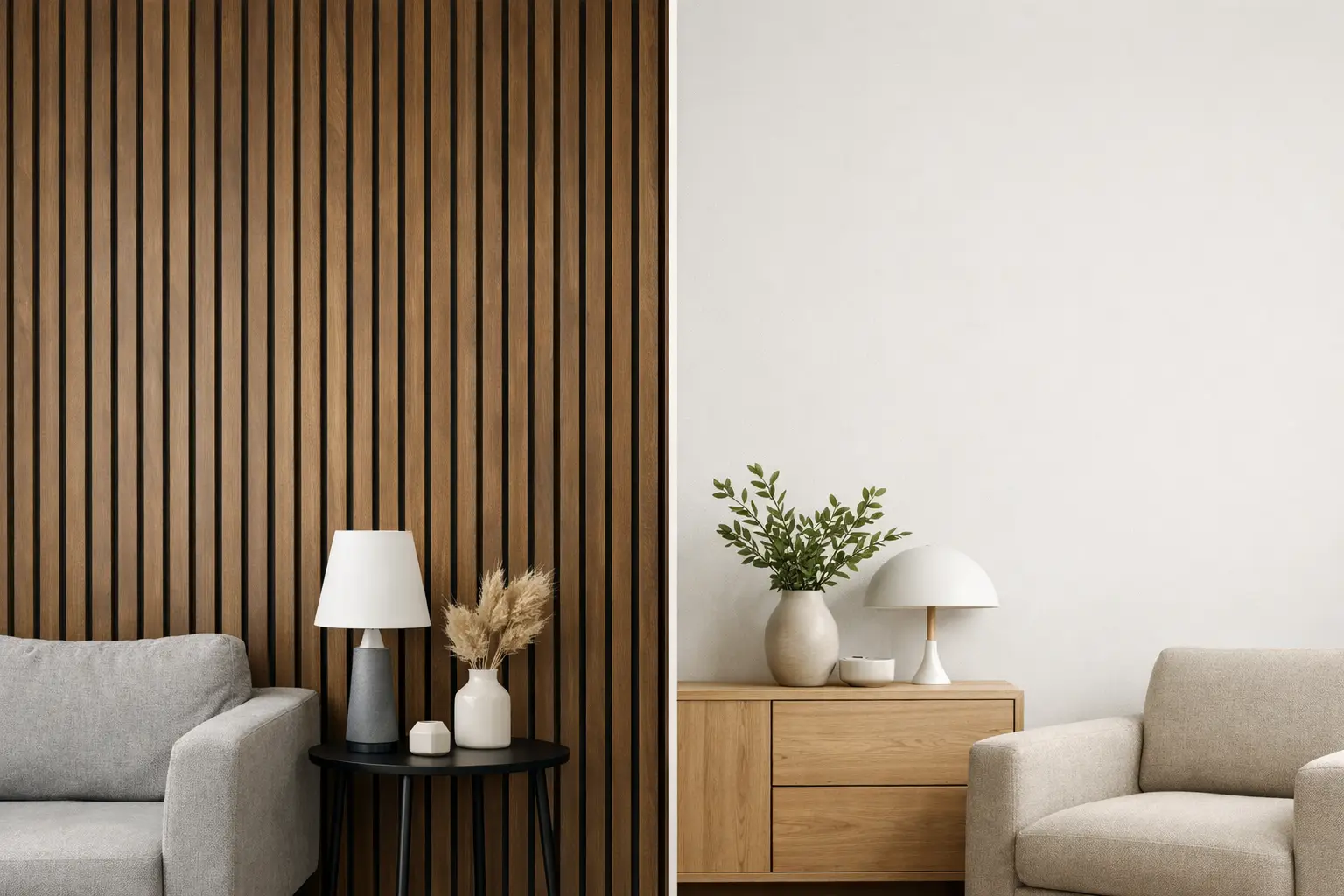
A freshly painted wall can make a room feel clean, but it rarely changes how the room sounds, how light moves through it, or how long the finish holds its visual appeal. When comparing slat panels vs painted walls, the real decision is not simply decorative. It is about whether you want a background finish or an architectural feature that shapes the experience of a space.
For a bedroom retreat, a busy office, a restaurant, or a refined reception area, both options have a place. Painted walls remain practical, familiar, and cost-effective for broad surfaces. Acoustic slat panels bring warmth, texture, and sound-softening performance to the areas that deserve more presence. The strongest interiors often use each material with purpose rather than treating the choice as all or nothing.
Slat Panels vs Painted Walls: The Design Difference
Paint is a color treatment. It can brighten a dark room, define a mood, and make an existing wall feel renewed. From soft warm neutrals to dramatic charcoal, paint offers a wide palette and a relatively simple way to change direction when styles evolve.
Slat panels create dimension from the start. Their vertical rhythm gives a wall or ceiling visual structure, while wood-inspired finishes introduce the organic character many contemporary spaces need. Instead of relying on furniture and artwork to make a plain wall feel considered, the surface itself becomes part of the design.
This distinction matters most in open-plan homes and commercial interiors. A painted feature wall may provide contrast, but a slatted finish can visually zone a dining area, frame a bed, define a reception desk, or give a meeting room a more intentional identity. The linear profile also has a useful effect in compact rooms: vertical slats naturally draw the eye upward, making ceilings feel higher and spaces feel more composed.
A painted wall is often the quieter choice. That can be exactly right when the room already has patterned flooring, expressive artwork, or a strong view. Slat panels work best when a wall should feel like a focal point without becoming overly decorative.
Acoustics: Where Panels Offer More Than Appearance
The most meaningful functional difference is sound. Standard paint does not improve acoustics. It may finish a wall beautifully, but the hard surface underneath continues to reflect sound into the room.
Acoustic slat panels are designed to soften reflected sound through their slatted face and acoustic backing. In practical terms, this can reduce the sharpness of echoes and make conversations feel calmer and clearer. The effect is especially valuable in rooms with tile, glass, polished concrete, high ceilings, or large open layouts.
For homeowners, that may mean a more comfortable TV room, home office, dining space, or bedroom. For hospitality and workplace projects, it can support speech clarity at a restaurant table, reduce the sense of noise in a reception area, and make video calls or meetings more pleasant.
There is an important distinction here. Acoustic panels can improve the sound quality within a room, but they are not a substitute for a purpose-built soundproofing system between rooms. If the goal is to stop noise transferring through walls, floors, or ceilings, the construction behind the surface needs attention too. For echo control and a more refined atmosphere, however, slat panels can make a noticeable difference where paint cannot.
Installation, Disruption, and Project Timing
Painting is a familiar process, but it is not always as effortless as it appears. Walls may need patching, sanding, priming, multiple coats, drying time, and touch-ups. In occupied homes, hotels, offices, or retail spaces, paint odor and drying conditions can also affect scheduling.
Slat panels offer a cleaner route to a finished feature surface. Installed over a suitable, properly prepared wall, they can cover minor visual imperfections and create an immediate transformation without the extended cycle of filling and repainting. Panels are particularly appealing for renovations where the goal is to create impact quickly and minimize disruption.
That said, installation quality still matters. Walls should be measured carefully, and installers need to plan for outlets, switches, corners, trims, and termination details. A beautifully selected panel can lose its premium effect if the edges are unfinished or the slat lines do not align. Accessories such as trims, corner edges, end slats, and V-groove solutions help deliver the polished, built-in look that makes a wall feel professionally resolved.
Paint remains easier for irregular walls, curved areas, or rooms where every surface needs a uniform finish. Slat panels are most effective when used strategically on a defined wall, a ceiling section, a passage, or a key architectural zone.
Maintenance and Everyday Durability
A painted wall needs more care than many people expect. High-touch areas around hallways, dining spaces, children’s rooms, and office corridors can show scuffs, marks, and chips. Even washable paint may require periodic cleaning, spot repairs, or a full repaint when touch-ups no longer blend with the surrounding wall.
Premium slat panels are designed for modern living. Their engineered, wood-inspired finishes deliver the visual warmth of timber without the ongoing sanding, staining, or sealing associated with traditional wood cladding. Routine care is generally straightforward: light dusting or a gentle wipe keeps the surface looking considered.
No finish is entirely maintenance-free. Panels should be selected and installed for the environment they will serve, and cleaning methods should remain appropriate for the product finish. In areas exposed to heavy moisture, direct water, or outdoor conditions, use a panel system specifically made for that application rather than assuming an interior decorative panel will perform everywhere.
For busy interiors, the benefit is consistency. A slatted feature wall is less likely to need frequent cosmetic renewal simply because a chair brushed against it or a bag left a mark near the entry.
Cost: Initial Spend Versus Long-Term Value
Paint is usually the lower-cost option at the outset, particularly when covering large areas. If a room needs a quick refresh before a sale, move-in, or seasonal update, paint provides immediate visual change without a significant material investment.
Slat panels cost more upfront because they are a finished architectural surface, not just a coating. The price reflects the panel construction, acoustic backing where applicable, finishing components, and installation planning. For design-led projects, that investment can be worthwhile because one feature wall can transform the perceived quality of an entire room.
The best comparison is not panel cost against one tin of paint. Consider the complete project: surface preparation, labor, repainting over time, acoustic needs, and the value of creating a signature space. In a hospitality venue, office, or premium home, a material that strengthens atmosphere and improves comfort can carry far more value than its square-foot price alone suggests.
A balanced approach often makes financial sense. Paint the majority of the room in a complementary tone, then invest in slat panels at the wall or ceiling that people naturally notice first. This creates contrast, controls budget, and avoids overwhelming the space with too much texture.
Choosing the Right Finish for Each Room
Paint is often the right answer for bedrooms with multiple walls, utility areas, rental refreshes, and spaces that need easy color flexibility. It is also a strong companion to panels. A deep painted wall can make oak-toned slats feel richer, while soft neutral paint allows darker wood-inspired finishes to stand out with confidence.
Choose slat panels when a room needs warmth, visual depth, acoustic support, or a more tailored identity. They are particularly effective behind a bed, around a media wall, in a dining nook, at an entrance, behind a reception desk, or along a boardroom wall. In commercial settings, they can also help make practical spaces feel more welcoming and premium from the first impression.
Consider the light before selecting a finish. Dark slats can feel beautifully dramatic in a well-lit, spacious room, while lighter wood tones bring softness to smaller interiors. Sample placement matters too. Look at the selected finish in morning light, evening light, and artificial lighting before committing to a full installation.
Inspiration Wood’s range is designed for this kind of considered transformation: natural wood-inspired character paired with practical, installable surface solutions for homes and professional spaces.
The most successful rooms do not choose between paint and panels based on trends alone. They use paint to create breathing room and use slats where texture, comfort, and architectural presence can change how a space feels every day.