

Blog
Home Cinema Sound Treatment Panels That Perform

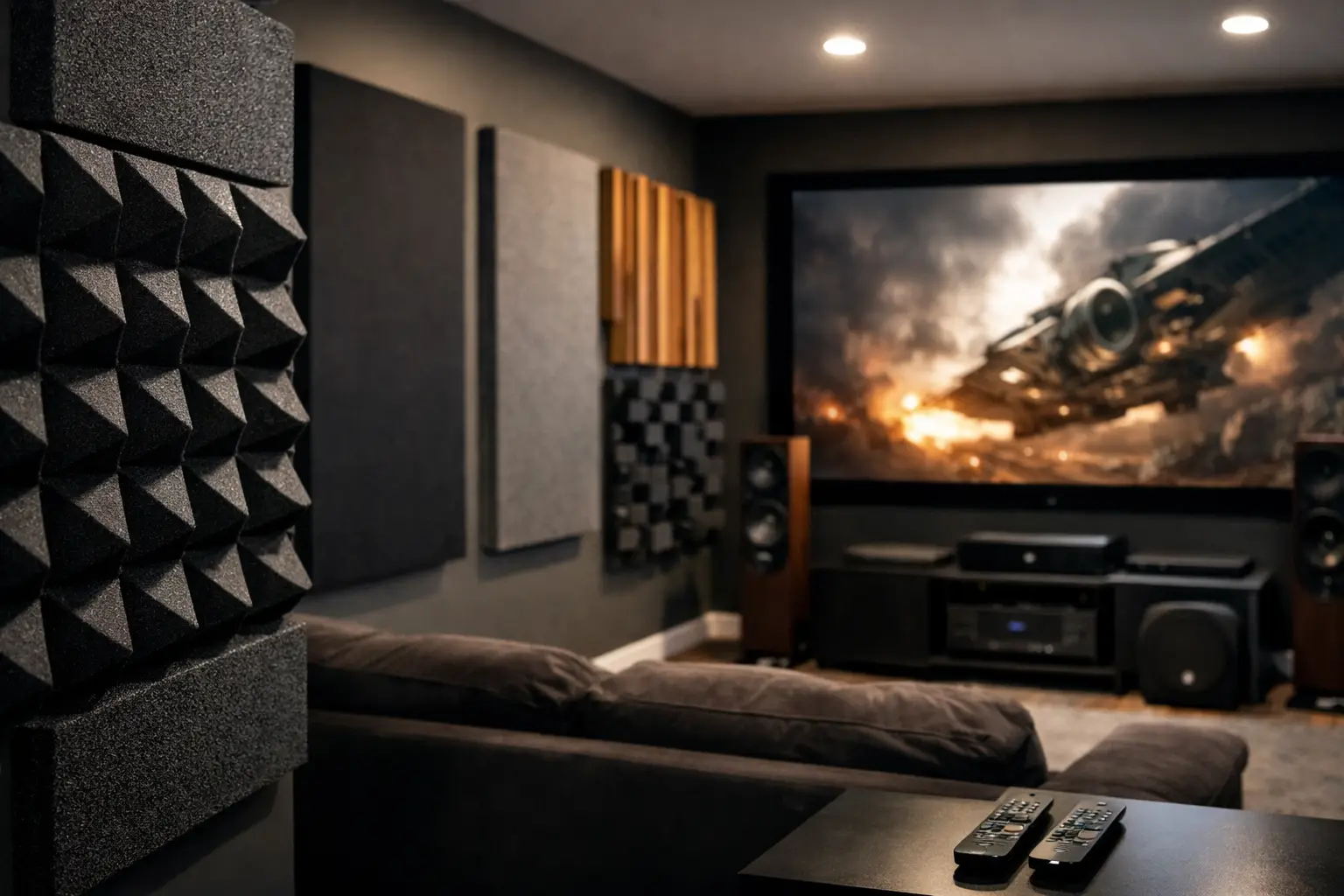
A beautifully specified projector, screen, and speaker system can still feel underwhelming when the room sends sound bouncing in every direction. Home cinema sound treatment panels address the part of the experience that equipment alone cannot solve: the room itself. With the right placement and finish, they can bring greater dialogue clarity, a more controlled sense of scale, and a considered architectural backdrop for movie nights.
For a dedicated theater, a media room, or an open-plan living space with a large television, acoustic treatment should feel like part of the design story. The aim is not to make a room silent or clinical. It is to soften the reflections that blur sound, reduce distracting echo, and create a space that looks as refined as it sounds.
Why a home cinema needs acoustic treatment
Every hard surface reflects sound. Glass doors, tiled floors, plaster walls, expansive ceilings, and large-format screens can all contribute to a room that feels bright, harsh, or overly lively. You may notice voices becoming difficult to follow at normal volume, effects sounding scattered rather than precise, or the urge to keep increasing the volume without achieving better detail.
This happens because direct sound from your speakers reaches your ears alongside reflected sound from the surrounding surfaces. When those reflections arrive quickly and in large numbers, they compete with the original signal. A well-designed room allows the soundtrack to feel more focused, so quiet dialogue remains intelligible and cinematic moments retain their impact without overwhelming the space.
Acoustic panels do not replace quality speakers, professional calibration, or sensible furniture placement. They support all three. In many homes, treatment is the difference between a system that is merely loud and one that feels immersive, balanced, and genuinely premium.
What home cinema sound treatment panels actually do
Sound treatment panels generally work by absorbing a portion of the sound energy that would otherwise reflect back into the room. This reduces reverberation and controls early reflections, particularly in the mid and high frequencies where speech detail and sharp effects live.
Decorative acoustic slat panels combine this practical role with a warm, architectural finish. Their linear form introduces depth and rhythm to a wall or ceiling, while the acoustic backing helps moderate sound reflections. They are especially effective where a bare wall would otherwise sit directly beside, behind, or opposite the listening position.
It is worth setting the right expectation. Slat-based acoustic wall panels improve the behavior of a room, but they are not a complete answer to every acoustic challenge. Deep bass is more difficult to control and may require dedicated bass traps, substantial insulation, or specialist acoustic design. Sound treatment also differs from soundproofing. Treatment improves the sound inside the room; soundproofing limits sound traveling to other rooms or outside.
For most residential cinema spaces, starting with the reflections you can hear is a practical and rewarding first step.
Where panels make the greatest difference
Placement matters more than covering every available surface. A thoughtful treatment plan often looks more luxurious and performs better than a room filled with panels from floor to ceiling.
Side walls at first-reflection points
The first-reflection point is where sound from a front speaker hits a side wall before reaching the main seating position. Treating these areas helps preserve stereo imaging and can make movement across the soundstage feel more convincing. In simple terms, sound effects and music are less likely to smear across the room.
A designer or installer can identify these points precisely, but they are often located along the side walls between the front speakers and the primary seats. In a compact media room, a pair of well-positioned acoustic feature walls can make a meaningful improvement without changing the entire interior.
The wall behind the screen or television
The front wall is a natural opportunity to unite performance and visual impact. Darker wood-inspired tones can frame a screen beautifully, reduce visual distraction, and give the room the atmosphere of a private cinema. Acoustic slat panels can also bring dimension to a wide wall that might otherwise appear flat in low lighting.
The acoustic benefit depends on the speaker layout and construction of the room, but the design benefit is immediate. Where a television is wall-mounted, plan cable routes, access points, and mounting reinforcement before installation so the finished wall remains clean and purposeful.
The rear wall behind seating
A hard rear wall close to the sofa or theater seats can create noticeable reflections and an uncomfortable sense of sound pressing forward. Treating all or part of this wall can calm the listening area while creating a sophisticated focal point behind the seating.
This is often an ideal location for a full-height slatted feature, particularly in a multipurpose lounge where the theater must feel like an elegant living space during the day.
Ceiling zones in rooms with hard floors
Ceilings are frequently overlooked. Yet a room with porcelain tile, polished concrete, or timber-look flooring may have several hard planes working against it. Ceiling treatment can reduce the sense of echo while adding a tailored, architectural finish.
This approach needs careful planning around lighting, air-conditioning grilles, sprinklers, and access panels. It is best used selectively, such as above the seating zone or along a central ceiling detail, rather than as an afterthought.
Choose panels for the room you have
There is no single panel layout that suits every home cinema. A compact apartment media wall, a large dedicated theater, and an open-plan entertainment room each present different acoustic and visual priorities.
In a smaller room, restraint is valuable. Too many absorptive surfaces can make the space feel unnaturally dull, especially if it already has upholstered seating, curtains, and rugs. Begin with the most reflective walls closest to the listening position, then assess the change before adding more treatment.
In a larger room with high ceilings and minimal soft furnishing, broader coverage may be appropriate. Here, panels can serve as a continuous design element across a rear wall, side wall, or ceiling while helping to bring the room into better acoustic balance.
Color and grain direction also shape the result. Deep charcoal and walnut-inspired finishes create a cocooning theater mood. Lighter oak-inspired tones suit contemporary family rooms, coastal homes, and spaces where natural light remains part of the experience. Vertical slats can make a low room feel taller, while a horizontal application may emphasize width on a large media wall.
Build a layered acoustic scheme
The most inviting theaters rarely rely on one material alone. Panels work best as part of a layered interior that includes upholstered seating, rugs, curtains, and considered joinery. Each material contributes differently, and together they avoid the harshness associated with rooms made entirely from hard finishes.
A practical scheme may use acoustic slat panels on a feature wall, a generous rug beneath the seating area, lined curtains over glazing, and fabric upholstery across the main seating. This is not about hiding every surface. It is about balancing reflective and absorptive materials so the room retains life without becoming noisy.
For projects with serious performance goals, such as a purpose-built theater or a hospitality screening room, consult an acoustic professional early. They can assess room dimensions, speaker positions, and low-frequency behavior before finishes are selected. This protects the investment in both equipment and interior design.
Plan installation before the final finish
Acoustic panels are designed to make a strong visual statement, so alignment and detailing deserve attention. Establish where the panel run begins and ends, how it meets corners, and whether trims or end slats are needed for a polished edge. Small decisions at this stage separate a well-finished feature wall from one that appears improvised.
Consider lighting at the same time. Warm, dimmable wall washing can reveal the texture of the slats without reflecting onto the screen. Recessed lighting, concealed LED details, and dark hardware usually sit comfortably within a cinema palette, provided they are positioned to avoid glare.
For wall-mounted speakers, control panels, or equipment cabinets, confirm clearances before installation. Panels should support the layout, not complicate servicing or compromise secure fixing. If the room is part of a renovation, it is also wise to plan electrical conduits and speaker cabling before surfaces are closed.
A better room begins with the surfaces
A home cinema should make every film, match, and concert feel intentional. The best home cinema sound treatment panels do more than reduce echo: they turn overlooked walls and ceilings into part of the experience. Choose placement with care, pair acoustic performance with a finish that belongs in your home, and let the room give your sound system the stage it deserves.