

Blog
How to Hide Uneven Walls With Premium Panels

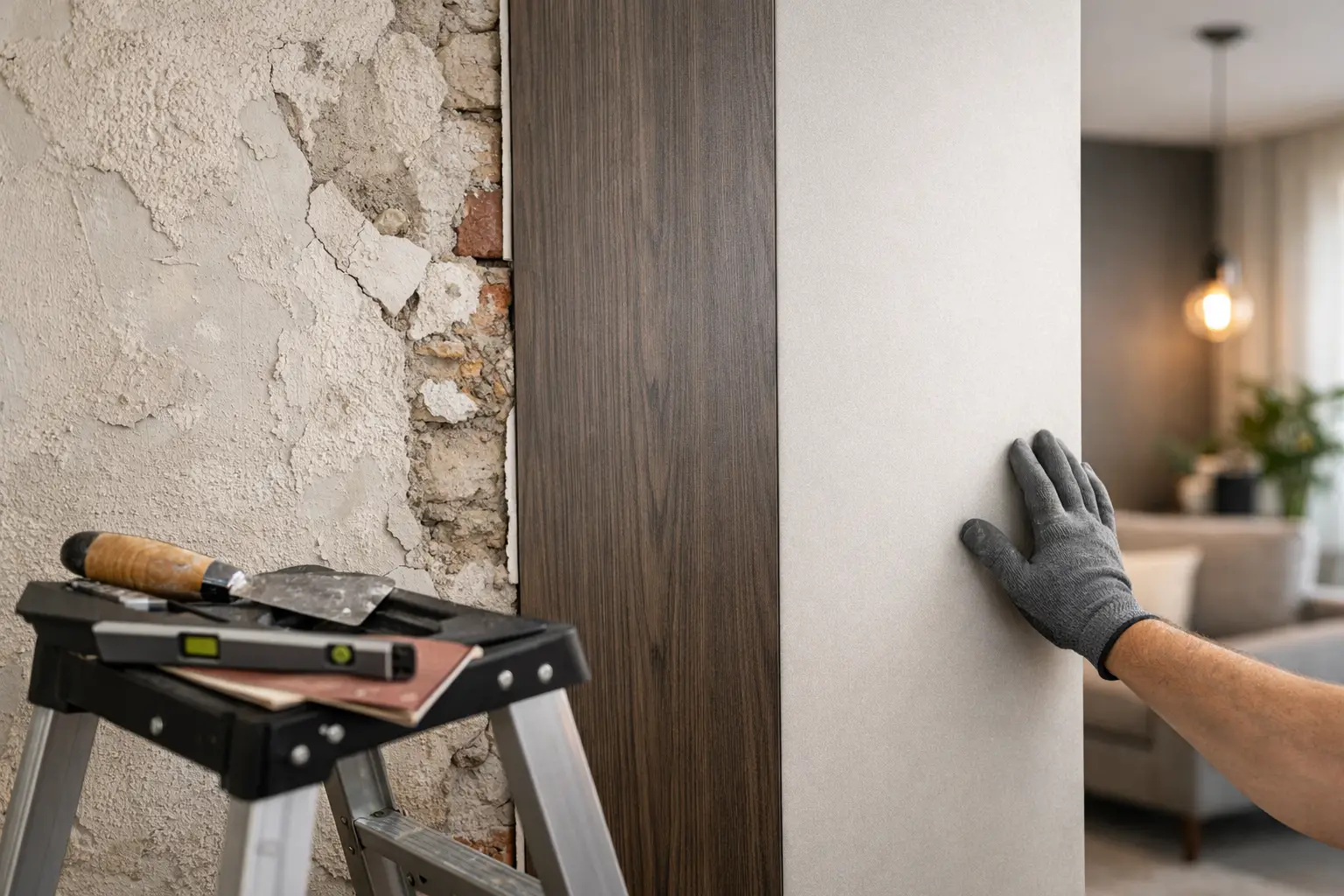
An uneven wall can make an otherwise considered room feel unfinished. Light catches every dip, old repairs remain visible beneath paint, and artwork never seems to sit quite right. If you are deciding how to hide uneven walls without committing to a dusty, disruptive replastering project, the right surface finish can create a cleaner, more architectural result.
Decorative wall panels are particularly effective because they do not merely distract from an imperfect substrate. They introduce depth, rhythm, and natural texture while creating a new finished face for the room. For homeowners and design professionals, this is often the difference between covering a problem and creating a feature.
Start by Assessing the Wall, Not Just the Finish
Not every uneven wall needs the same solution. A wall with light texture, minor ripples, or visible patch repairs can usually be transformed with a decorative covering. A wall that bows significantly, has loose plaster, active moisture, or structural cracks needs attention before any finish is installed.
Run a long straightedge or level across the wall in several directions. This will show whether you are dealing with shallow surface variation or a more pronounced high-and-low pattern. Also check for dampness, especially on exterior-facing walls, in bathrooms, and around windows. Panels should never be used to conceal an unresolved leak or deteriorating wall material.
Once the wall is sound and dry, you can choose a solution based on the degree of unevenness, the room’s purpose, and the look you want to achieve. This is where a design-led approach pays off: the same wall can become a warm bedroom backdrop, a quiet home-office feature, or a refined hospitality focal point.
How to Hide Uneven Walls With Slat Wall Panels
Acoustic slat wood panels are among the most polished ways to hide uneven walls. Their vertical timber-inspired slats create visual movement that naturally draws the eye away from small inconsistencies. The felt backing adds a soft, tailored background, while the linear layout brings order to a wall that previously looked irregular.
This option works especially well where the wall is uneven but generally stable. In many cases, panels can be mounted directly to a reasonably flat surface with an appropriate adhesive and mechanical fixings. The panel itself helps disguise minor undulations because the eye reads the repeated slat pattern rather than the original wall behind it.
For walls with deeper variations, install a level batten framework first. Battens create a true mounting plane, allowing the finished panel surface to sit straight even when the existing wall does not. This method takes more planning and slightly reduces room depth, but it delivers the crisp shadow lines and precision expected in a premium interior.
Acoustic slat panels also add a practical layer of comfort. In open-plan homes, offices, meeting rooms, restaurants, and reception spaces, they can help soften reflected sound and improve the sense of calm. The result is a wall treatment that solves a visual issue while contributing to better everyday living.
Choose Direction With Intention
Vertical slats are a natural choice for most rooms because they make ceilings appear higher and give the wall an elegant, elongated appearance. They are particularly effective in compact rooms, hallways, and spaces with lower ceilings.
Horizontal installation can make a narrow room feel wider, although it requires more careful alignment. On a noticeably uneven wall, vertical panels are usually more forgiving because the lines lead the eye upward rather than across the wall’s changing level. A professional installer can advise on the best orientation where architectural lines, ceiling levels, or adjoining finishes need to align.
Finish the Edges Properly
A premium panel installation is defined by its details. Use matching end slats where the panel ends in open view, and select trims or corner edges to create a deliberate transition around external corners, doors, or return walls. These components prevent the installation from looking like an afterthought.
Plan outlets, switches, wall lights, and TV mounts before installation. Panels can be neatly cut around electrical points, but accurate measurements are essential. If a television will be mounted on the wall, ensure its bracket is fixed into suitable structural support rather than relying on the decorative panel alone.
Build Out Severely Uneven Walls for a Straight Finish
When a wall has substantial dips or bows, a batten system is often the most reliable route. Timber or metal battens are spaced across the wall and shimmed where necessary until they form a level plane. Your chosen paneling is then secured to this framework.
This approach is especially useful in older homes, converted buildings, commercial renovations, and spaces where walls have been altered over time. It also gives you a cavity for concealing cables, which is valuable behind media walls, reception desks, and workstations.
There are trade-offs. A built-out wall takes more time, requires careful measuring, and projects farther into the room. In a very small space, that lost depth may matter. Yet in a living room, boardroom, boutique, or bedroom feature wall, the gain in finish quality can easily justify the additional build-out.
If you are using acoustic panels, mounting them over battens may also improve their sound-absorbing performance by creating an air gap behind the panel. The exact benefit depends on the wall assembly and room acoustics, but it can be a worthwhile consideration where speech clarity and comfort matter.
Other Ways to Conceal Minor Wall Imperfections
Panels are not the only answer, particularly when the wall has only slight texture or you want a softer decorative effect. Textured wallpaper can disguise fine cracks and uneven paintwork, while a heavier embossed paper is often more forgiving than a smooth finish. The wall still needs to be clean, dry, and well prepared, as wallpaper will not hide a deep ridge or loose plaster.
Limewash-style and textured paint finishes can also reduce the visibility of shallow imperfections. Their tonal variation creates a relaxed, layered surface, unlike flat paint, which tends to emphasize every flaw under side lighting. These finishes suit organic, understated interiors, but they do not offer the dimensional impact or acoustic benefit of a slat panel feature.
Fabric wallcoverings, upholstered panels, and carefully placed full-height drapery can work in bedrooms, lounges, and hospitality spaces. They bring softness and warmth, though they are less practical in high-touch areas and generally require more care than durable wood-inspired panel systems.
For a temporary or lower-cost improvement, large-scale artwork, shelving, or a gallery arrangement may shift attention from a problem area. This can be effective on one small section of wall, but it does not resolve an uneven backdrop across an entire room. It can also make a space feel visually busy if used only to hide flaws.
Create a Feature Rather Than a Cover-Up
The most successful uneven-wall solution considers the room as a whole. Instead of paneling every surface, use a single wall to frame a bed, define a dining zone, elevate a television wall, or give an office reception area a stronger identity. A focused installation feels intentional and allows the material’s texture to stand out.
Consider the panel color alongside flooring, cabinetry, metal finishes, and natural light. Darker timber tones add drama and work beautifully behind light furniture or stone surfaces. Lighter oak-inspired finishes can make an interior feel open and relaxed, particularly in coastal, contemporary, and Scandinavian-influenced schemes.
Lighting deserves equal attention. Wall washers and strong side lighting can reveal irregularities on painted walls, but they become an asset with slatted panels, emphasizing their depth and shadow. Soft, angled lighting helps create the warm, layered atmosphere that makes a feature wall feel designed rather than simply installed.
For projects that need a refined, installable finish, Inspiration Wood’s acoustic slat panel systems offer a practical way to turn an imperfect wall into a defining architectural element. With considered trims, clean edges, and the right preparation, the finished surface can look deliberate from every angle.
An uneven wall does not have to set the standard for the room around it. Treat it as an opportunity to introduce texture, warmth, and a finish that makes the entire space feel more composed.