

Blog
Which Rooms Need Acoustic Treatment Most?

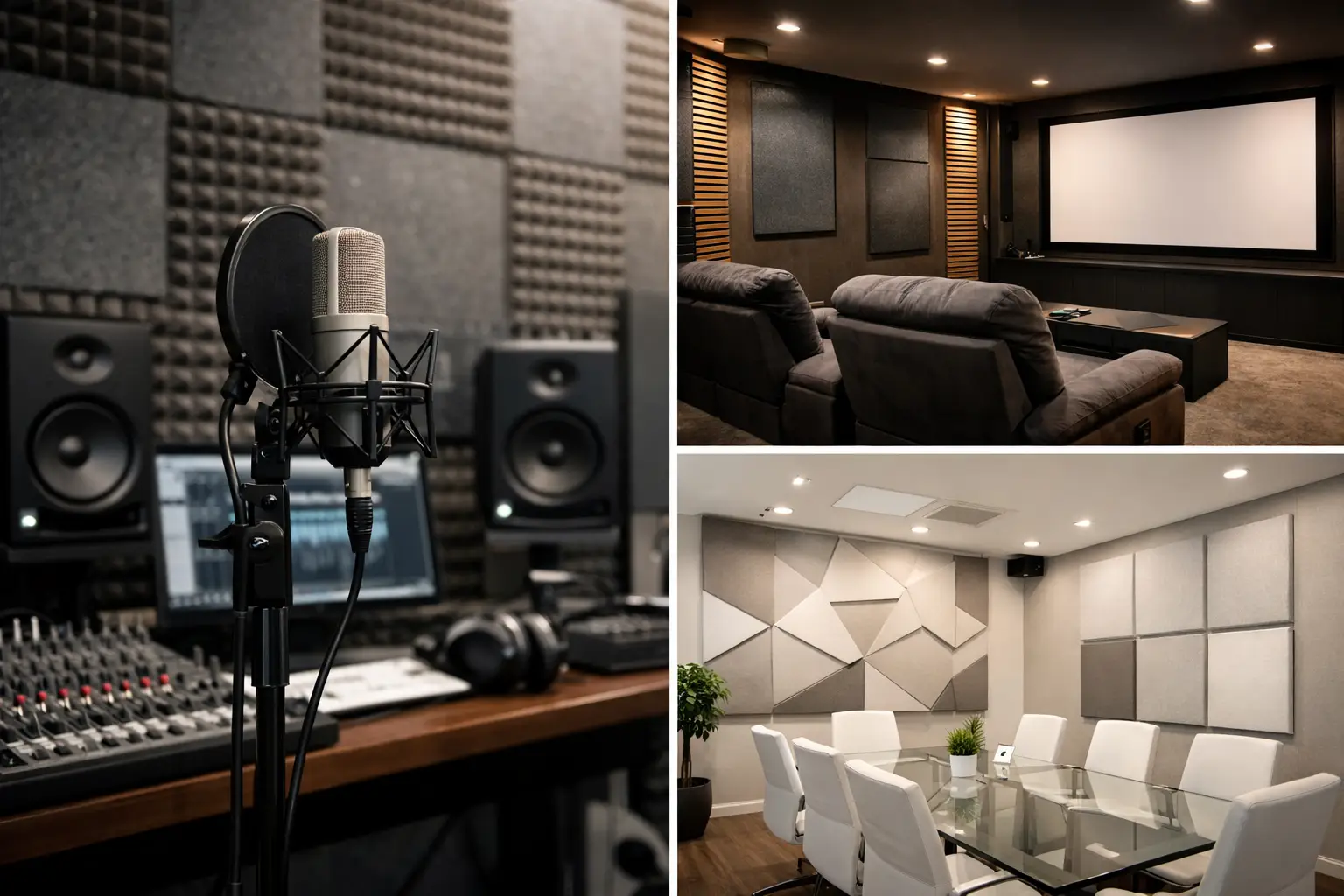
A beautiful room can still feel unfinished when every conversation carries, the television sounds harsh, or chairs scrape across the floor with startling force. If you are wondering which rooms need acoustic treatment, start with the spaces where people gather, work, relax, or communicate. The need is rarely about silence. It is about making a room feel calmer, clearer, and more comfortable to inhabit.
Acoustic treatment is especially valuable in modern interiors, where hard surfaces such as tile, glass, concrete, stone, and large-format flooring create a clean architectural look but give sound little opportunity to soften. The result is reverberation: sound that reflects around the room after the original source has stopped. A considered acoustic wall or ceiling finish can reduce that effect while adding warmth, texture, and a more refined sense of design.
Which Rooms Need Acoustic Treatment First?
Prioritize rooms that combine hard finishes with frequent activity. A compact room with rugs, curtains, upholstered seating, and bookshelves may need very little intervention. By contrast, a large open-plan space with polished floors, bare walls, and expansive glazing can sound overly lively even when it is beautifully furnished.
A simple test is to stand in the room and clap once. If the sound rings, flutters, or seems to linger, the room may benefit from acoustic absorption. More telling still is everyday experience: do people raise their voices at dinner, struggle to follow meetings, or turn up the television because dialogue feels unclear? Those are practical signs that the room is asking for acoustic attention.
Open-plan living rooms and great rooms
Open-plan living spaces are often the first place homeowners notice acoustic discomfort. They bring cooking, dining, entertaining, and lounging into one generous area, often under high ceilings and alongside glass doors. This creates an inviting lifestyle setting, but it also gives sound a long path to travel.
Acoustic slat paneling on a feature wall, media wall, or section of ceiling can help control reflections without compromising the open, airy feel of the room. It is not necessary to cover every surface. A well-placed treatment zone, balanced with soft furnishings, can make voices more natural and make movie nights feel more immersive. The visual benefit matters too: wood-inspired slats introduce depth and architectural rhythm where a plain wall may otherwise feel flat.
Home theaters, media rooms, and gaming spaces
A dedicated media room needs acoustic treatment more than almost any other residential space. Here, the goal is not simply reducing echo. It is improving the listening experience so speech, music, and effects are easier to distinguish at comfortable volume levels.
Hard walls can bounce sound back toward the listener, making a premium screen and sound system feel less polished than expected. Acoustic panels positioned on side walls, behind seating, or at selected ceiling points can reduce distracting reflections. The exact layout depends on speaker placement, room shape, and the level of performance you want. For a family media room, a few strategic surfaces may be sufficient. For a serious theater, an acoustic plan should be considered alongside equipment and lighting from the outset.
Home offices and study areas
A visually polished home office should also support clear thinking and clear calls. Video meetings become tiring when a room produces a hollow, echoing voice. This is common in minimally furnished studies, converted guest rooms, and offices with desks facing bare walls.
Treatment behind or beside the desk can improve speech clarity for both in-person discussions and online calls. It can also make the room feel more composed on camera. Rather than treating the office like a recording booth, aim for a balanced environment that supports concentration while retaining a residential or executive finish. Acoustic slat panels are particularly suited to this role because they can read as an intentional design feature rather than a purely technical addition.
Bedrooms and nurseries
Bedrooms do not always need extensive acoustic treatment, especially when they already contain bedding, rugs, curtains, and upholstered furniture. Yet they can benefit when exterior noise, neighboring rooms, or a high, reflective ceiling disrupts the sense of rest.
There is an important distinction here. Acoustic treatment reduces echo within a room; it does not fully block sound entering through windows, doors, or lightweight walls. If traffic noise is the main concern, sealing gaps and improving window or door performance may be the more effective first step. If the bedroom simply feels sharp and noisy inside, a treated feature wall behind the bed can add both acoustic softness and a luxurious focal point.
Commercial Rooms Where Acoustics Shape Experience
For commercial interiors, sound affects more than comfort. It influences privacy, service quality, concentration, and the impression a brand leaves on visitors. A striking fit-out is more successful when people can speak naturally within it.
Meeting rooms and boardrooms
Meeting rooms need speech clarity. When voices bounce off glass partitions, hard tables, and ceilings, participants begin repeating themselves or speaking louder. Hybrid meetings suffer even more because microphones capture the room’s reflections alongside the speaker.
Treating a feature wall or ceiling plane can make conversations easier to follow and create a calmer, more confident setting for clients. In a boardroom, the finish should feel considered rather than utilitarian. A premium timber-look acoustic surface offers a practical way to support performance while reinforcing the quality of the space.
Restaurants, cafés, and hospitality lounges
A lively restaurant is desirable. A room so loud that guests cannot hear each other is not. Restaurants and hotel lounges frequently use timber, tile, stone, glass, and exposed ceilings to create atmosphere, but those materials can amplify crowd noise as occupancy rises.
Acoustic treatment helps retain energy without allowing the room to become exhausting. Ceiling treatments are often valuable where wall space is occupied by windows, artwork, shelving, or service areas. In smaller venues, one thoughtfully finished wall can make a meaningful difference. The goal is not to remove the buzz. It is to give guests a setting where they can enjoy it.
Reception areas, retail spaces, and showrooms
Reception spaces and retail environments are often designed for visual impact, with expansive surfaces and high ceilings that make sound travel. While these spaces may not require the same level of control as a boardroom or restaurant, a harsh acoustic environment can make a premium setting feel impersonal.
A slatted feature wall behind a reception desk, within a display zone, or along a circulation area can soften the overall sound profile and strengthen the visual identity of the interior. This is especially effective in showrooms where materials, finish quality, and customer experience are central to the sale.
Studios, clinics, and consultation rooms
Studios for content creation, music, or podcasting need a more deliberate acoustic approach because recording quality is directly affected by reflections. Absorption should be placed with the microphone position and sound source in mind, rather than applied only for decoration.
Clinics, wellness rooms, and consultation spaces have a different priority: discretion and calm. Acoustic treatment can reduce the clinical sharpness of a hard-finished room and make conversations feel more private, although it should not be mistaken for complete soundproofing. Where confidentiality is critical, combine interior absorption with appropriate wall, door, and ceiling construction.
Treatment Is Not the Same as Soundproofing
This distinction prevents costly disappointment. Acoustic treatment improves how sound behaves inside a room by reducing echo and reverberation. Soundproofing limits sound transfer between rooms or from outdoors, usually through mass, sealing, isolation, and construction changes.
A slat acoustic panel can make an office call clearer and a restaurant more comfortable, but it will not stop loud music passing through an uninsulated partition. If your primary complaint is “I can hear the room next door,” assess the building envelope first. If the complaint is “this room sounds loud and tiring,” acoustic treatment is likely the right starting point.
How Much Treatment Does a Room Need?
There is no universal square-foot rule because room volume, furnishings, ceiling height, wall materials, and use all matter. Start with the surfaces closest to the activity: behind a television, beside a dining table, opposite a workstation, or on the walls that face each other across an open space. High ceilings and large glass areas generally call for more intervention than compact, well-furnished rooms.
Avoid treating every wall without a reason. Too much absorption can make a room feel acoustically flat, particularly in living spaces and hospitality settings that need some life and presence. The most successful schemes pair panels with the existing palette of rugs, curtains, upholstery, and joinery to create a balanced result.
For homeowners and design professionals, Inspiration Wood acoustic slat panels offer a design-led way to introduce that balance. Their natural wood-inspired finish allows acoustic performance to become part of the architecture, rather than an afterthought applied to solve a problem.
The best room to treat is the one that keeps asking you to speak louder, listen harder, or leave sooner than you would like. Address that experience with a finish that belongs in the space, and the improvement will be heard as much as it is seen.