

Blog
Slat Panels vs Tiles: Which Finish Fits?

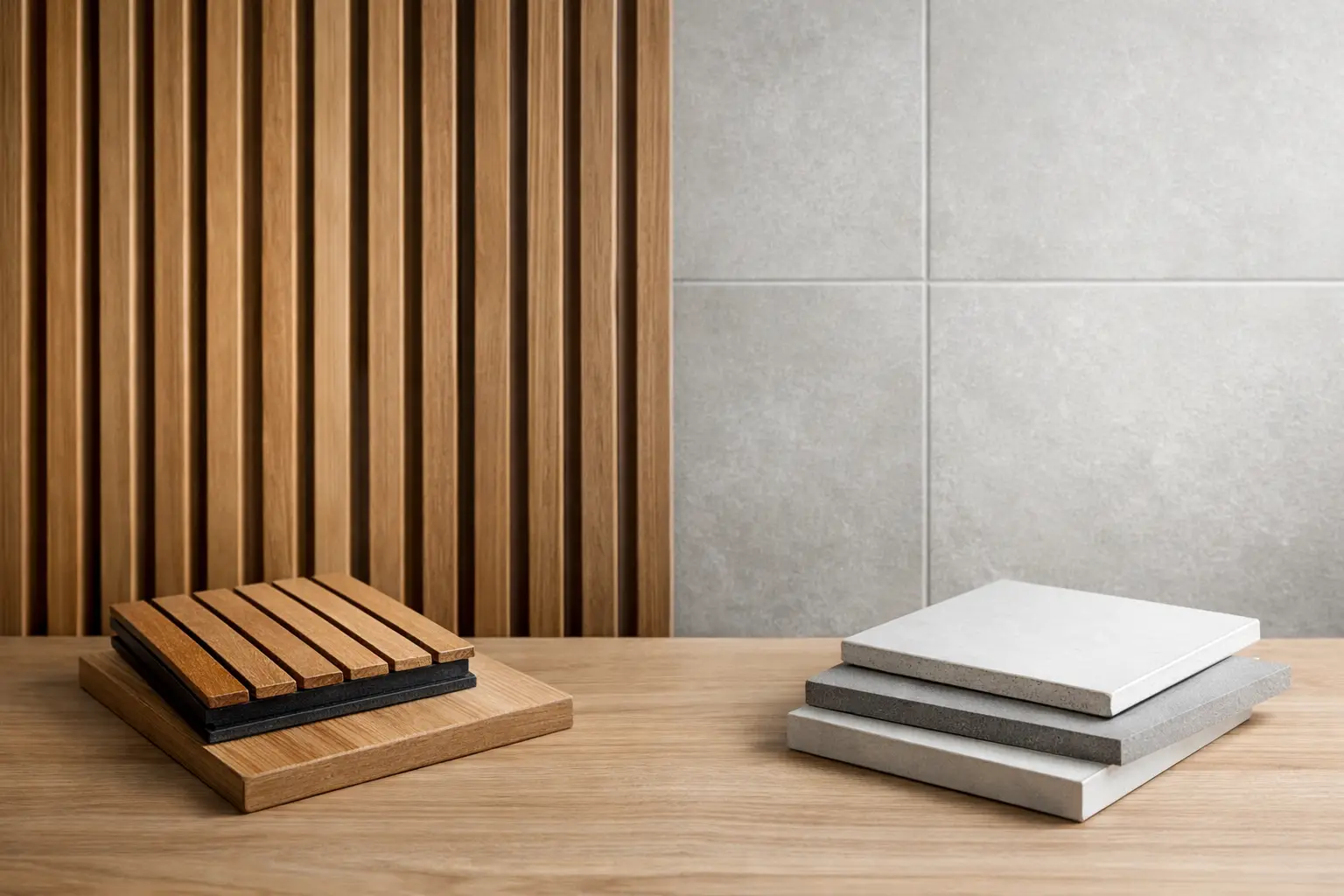
A hard tiled wall can look immaculate and still leave a room feeling cold, echoing, or unfinished. That is where the choice between slat panels vs tiles becomes more than a question of style. Both finishes can define a wall, protect a surface, and bring a premium point of view to a home or commercial interior. Yet they deliver very different experiences once the room is occupied.
For a polished bathroom, busy kitchen, or spill-prone hospitality area, tile remains a trusted material. For a living room, bedroom, office, reception area, restaurant, or media space where warmth and better sound matter, acoustic slat panels offer a distinctly different kind of transformation. The right answer depends on the room’s conditions, the desired atmosphere, and how the finish needs to perform over time.
Slat Panels vs Tiles: The Essential Difference
Tiles are a dense, hard-surface finish, commonly made from ceramic or porcelain. Their visual strength lies in their variety: stone looks, concrete effects, gloss finishes, handcrafted texture, and large-format minimalism. They create a crisp, durable surface that works especially well where water, splashes, heat, and frequent cleaning are part of daily life.
Slat panels bring a more architectural, layered finish to walls and ceilings. Premium acoustic panels combine wood-inspired slats with an acoustic backing, creating depth, shadow, and a warmer visual rhythm than a flat tiled surface. They are designed to make a room feel considered rather than merely covered.
This difference is also practical. Tile reflects sound because it is hard and non-porous. Acoustic slat panels are intended to help absorb sound reflections, reducing the sharpness of conversations, television noise, and general room reverberation. In spaces with open layouts, hard flooring, glass, and contemporary furnishings, that can change how the entire room feels.
Choose the Finish Around the Room’s Job
The most successful interiors do not use one material everywhere. They select finishes according to how each space is used.
Where tiles make the most sense
Tiles are a natural fit for wet and high-contact areas. Shower walls, bathroom floors, kitchen backsplashes, laundry rooms, pool-adjacent spaces, and commercial washrooms all benefit from a surface that tolerates moisture and is easy to wipe down. When correctly installed and grouted, quality tile offers long-term durability in places where water resistance is non-negotiable.
Tile also suits rooms where a clean, cool, mineral-inspired aesthetic is the goal. A large-format porcelain tile can make a compact bathroom feel more expansive, while a textured tile can add interest without introducing a lot of visual movement.
The trade-off is that a tiled surface can feel acoustically hard, particularly when paired with polished concrete, stone, glass, or exposed ceilings. In a restaurant, office reception, or open-plan home, too many hard surfaces can make voices carry and everyday noise feel more pronounced.
Where slat panels create greater value
Slat panels are at their best where ambiance, visual warmth, and acoustic comfort are central to the brief. Think feature walls behind a bed, television walls, dining areas, home offices, hallways, meeting rooms, hotel lobbies, treatment rooms, and retail interiors. A slatted finish adds a tailored, high-end dimension without demanding the maintenance associated with traditional timber cladding.
In an office, acoustic panels can support clearer conversation and a more composed atmosphere. In a home, they can soften the sound of a large open-plan room while bringing the grounded character of wood into a modern interior. In hospitality, they can help create the intimate, design-led setting guests remember.
Slat panels are not a substitute for waterproof tile inside a shower enclosure or another constantly wet area unless the specific product and installation system are rated for that use. The strength of a premium finish lies in using it where it can perform beautifully, not forcing it into the wrong environment.
Aesthetic Impact: Flat Surface or Architectural Depth
Tile can be dramatic, but it generally reads as a continuous plane. Its pattern, grout lines, sheen, and scale do the visual work. This can be exactly right for a refined, minimal bathroom or a clean commercial fit-out.
Slat panels create a different visual language. The repeated lines draw the eye upward on a ceiling or across a wall, making a room appear taller, wider, or more intentional. The spacing between slats creates subtle shadows that shift with daylight and warm interior lighting. That depth is particularly effective in spaces that need character without clutter.
Wood-inspired tones also layer easily with contemporary materials. Pair dark slats with black detailing and stone for a sophisticated, moody interior. Choose a lighter oak-inspired finish alongside soft fabrics and neutral walls for a relaxed, elevated home. In commercial settings, the same material can introduce warmth to glass, metal, and concrete without compromising a clean architectural aesthetic.
If your vision is a statement wall with texture and presence, slat panels typically offer more immediate impact than tile. If your goal is a sleek, water-ready surface with a stone, terrazzo, or polished finish, tile may be the stronger design decision.
Acoustics Can Change How a Space Performs
Acoustics are often considered after a room is complete, when the echo becomes difficult to ignore. This is especially common in renovated homes and commercial interiors with open plans, tiled floors, large windows, and minimal soft furnishings.
Acoustic slat panels help address this challenge by introducing an absorptive element on the wall or ceiling. They do not make a room silent, nor are they a replacement for specialist acoustic engineering in performance venues. But they can noticeably improve the comfort of everyday spaces by reducing reflected sound and making speech feel less harsh.
This benefit is meaningful in boardrooms, call spaces, restaurants, podcast rooms, executive offices, and family living areas. A finish that looks luxurious while contributing to better speech clarity and a calmer atmosphere earns its place beyond appearance alone.
Tiles offer no comparable absorption. That does not make them inferior. It simply means sound control should be addressed elsewhere through rugs, curtains, upholstered furniture, acoustic ceilings, or designated wall treatments.
Installation, Renovation Time, and Site Disruption
Tile installation is a skilled, permanent process. It may involve substrate preparation, waterproofing, adhesive, cutting, spacing, grouting, curing, and cleanup. The finished result can be exceptional, but it often requires more time and more wet-trade coordination than homeowners expect.
Slat panels are generally a cleaner route to a finished feature wall or ceiling. They can be installed over suitable prepared surfaces using the recommended fixing method, allowing installers and experienced renovators to achieve a high-end result with less mess than a conventional tiled installation. Matching trims, corner edges, and end slats bring a resolved, professional finish to visible edges and transitions.
The condition of the existing wall still matters. Panels should be fitted to a sound, dry, and appropriately level substrate, while tiles demand their own careful preparation to prevent cracking, movement, or water ingress. Neither material should be treated as a shortcut around poor surface preparation.
For projects working to a tight opening date, slat panels can be especially appealing. A reception feature wall, restaurant banquette backdrop, or bedroom focal point can gain immediate character without the extended stages of tiling and grouting.
Maintenance and Long-Term Living
Both surfaces are relatively easy to care for when used appropriately. Tile is highly practical for cleaning splashes and everyday marks. Grout is the main consideration, as it may discolor or require periodic deep cleaning depending on the location and finish selected.
Quality slat panels are designed for low-maintenance modern living. Regular dusting or gentle vacuuming between the slats is usually sufficient, with a lightly damp cloth suitable for surface marks where recommended. Unlike natural timber, wood-inspired panels do not require sanding, staining, or routine sealing to preserve their appearance.
For exterior applications, the comparison changes. Outdoor composite wood panels are engineered to withstand weather exposure with far less upkeep than traditional wood cladding. Exterior tile can also perform well, but it requires the correct rating, substrate preparation, adhesive, and drainage details. The decision should account for sun, rain, temperature movement, slip resistance, and the building’s architectural style.
Can You Use Tiles and Slat Panels Together?
Often, the strongest interiors use both. A bathroom might feature tile in the shower and around the vanity, with slat panels on a dry adjacent wall for warmth. A restaurant can use durable tile around a service counter and acoustic slats through the dining area. In a home, tile may define the fireplace surround while slat panels continue onto the media wall.
The key is to create a clear hierarchy. Let tile handle water, wear, and easy-clean zones. Let slat panels introduce softness, texture, acoustic comfort, and visual drama where people gather. Repeating one or two tones across both finishes keeps the material palette composed rather than busy.
The Better Choice Is the One That Supports the Experience
When comparing slat panels vs tiles, do not ask which material is universally better. Ask what the room needs to do. Tile is the disciplined choice for wet zones and hard-working surfaces. Slat panels are the design-forward choice for spaces that need warmth, dimension, and improved acoustic comfort.
A well-chosen wall finish should still feel right after the furniture is in place, the room is busy, and daily life has begun. Select the surface that supports that experience, then let the details – tone, edge finishing, lighting, and installation quality – turn a functional decision into an extraordinary space.