

Blog
Acoustic Panels Versus Curtains for Better Sound

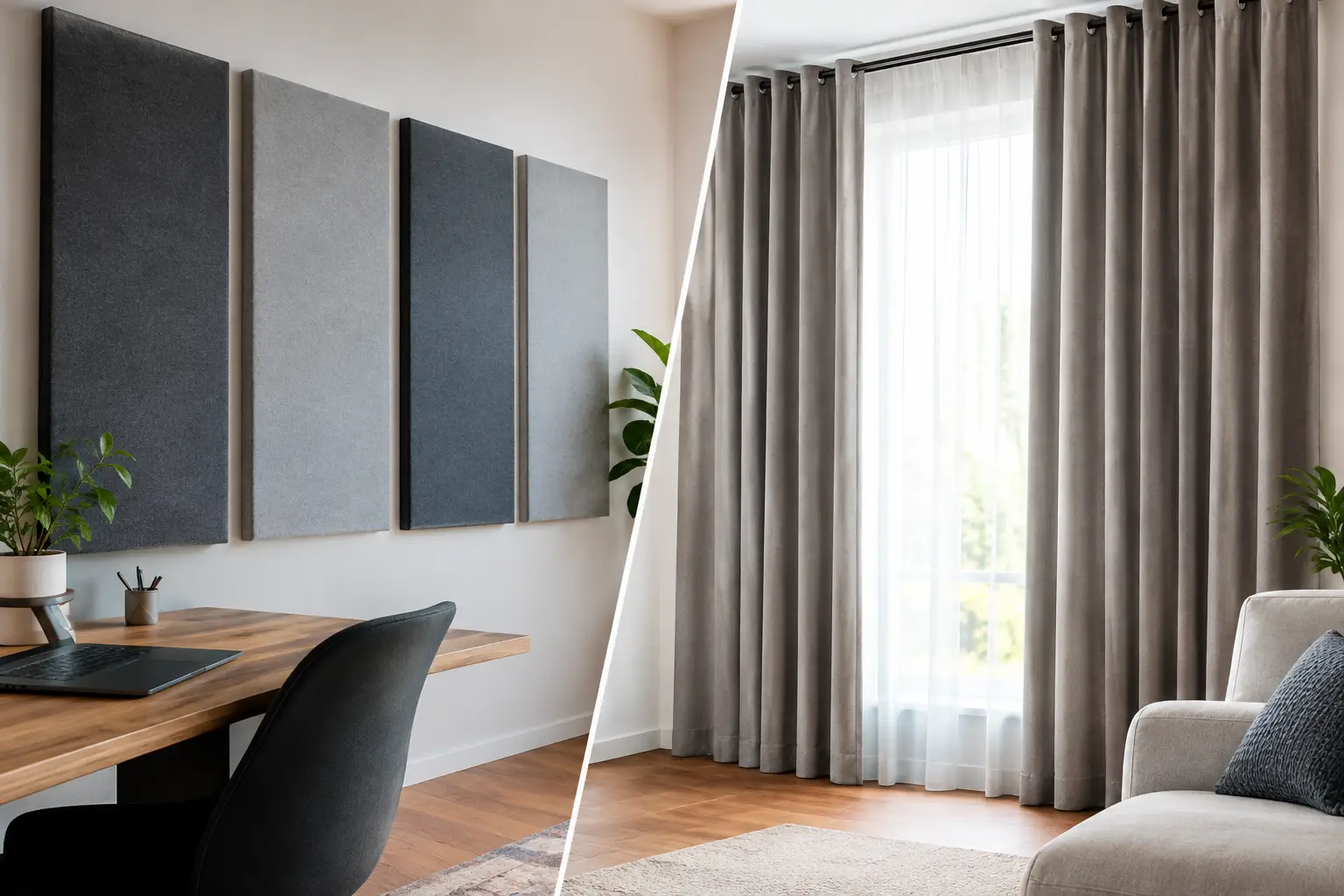
A beautiful room can still feel unfinished when sound bounces sharply off hard surfaces. Conversations become tiring, television audio feels harsh, and a restaurant, office, or open-plan living area loses its sense of calm. When comparing acoustic panels versus curtains, the better choice depends on the room’s purpose, the surfaces already in place, and how much visual impact you want the solution to make.
Curtains can soften a space quickly, particularly around large windows. Acoustic wall panels are designed to address reflected sound across broader wall areas while adding architectural depth and warmth. Neither is a universal replacement for the other, but understanding the difference makes it far easier to invest in a finish that looks considered and performs where it matters.
Acoustic Panels Versus Curtains: The Core Difference
Both panels and curtains can reduce the sense of echo in a room. They do this by absorbing some sound energy rather than allowing it to reflect back into the space. The difference lies in their construction, placement, and consistency of performance.
Curtains are soft, flexible fabrics. Their acoustic contribution is strongest when they are full, pleated, and hung close to a reflective surface such as glass. A thin, flat curtain may provide visual privacy and light control, but it will have a modest effect on reverberation. Heavier drapery with generous fullness performs better, especially in rooms where expansive glazing is the main source of unwanted reflection.
Acoustic panels are purpose-built interior surfaces. In a premium slatted panel, timber-look slats create a refined linear finish while an acoustic backing helps absorb reflected sound. Installed across a feature wall or ceiling area, panels bring a more permanent and evenly distributed acoustic treatment to the room. They are particularly effective where bare walls, ceilings, polished floors, glass partitions, and contemporary furniture create a hard-surfaced environment.
The key distinction is simple: curtains work best as soft furnishings around windows, while acoustic panels turn underused wall or ceiling surfaces into a design feature with a functional role.
When Curtains Are the Right Choice
Curtains earn their place in many well-designed interiors. In a bedroom, lounge, or hospitality suite with substantial windows, they contribute softness, privacy, and light control at the same time. They can also reduce the sharpness of sound reflections from glass, making the room feel more comfortable.
They are an especially sensible first step when a room is dominated by glazing and needs a layered, residential feel. A lined curtain with a generous wave or pleat will generally perform better than a lightweight blind or sheer fabric. For renters, curtains may also be the more practical option because they can be removed without altering the walls.
There are trade-offs. Curtains only treat the areas they cover, and they are often opened during the day, precisely when a bright living room or busy workspace may need acoustic control most. Fabric also collects dust and requires periodic cleaning, particularly in hospitality settings or high-traffic family spaces. In kitchens, dining areas, entrances, and commercial interiors, curtains may not suit the maintenance demands or the desired aesthetic.
Curtains can support better acoustics, but they rarely solve a pronounced echo problem on their own when the room contains many hard finishes.
Where Acoustic Panels Make a Bigger Difference
Acoustic panels are ideal when sound comfort is part of the brief rather than an afterthought. Think of a home theater, media room, open-plan lounge, meeting room, boardroom, restaurant, reception area, or focused work zone. In these spaces, speech clarity and a calmer atmosphere influence how people feel and communicate.
A slatted acoustic panel installation can help reduce the reflected sound that makes voices compete with one another. It will not eliminate all noise, but it can make a room feel less hollow and less fatiguing. In offices, that can support more productive conversations. In hospitality venues, it can make tables feel more private and inviting. At home, it can help a living space feel composed rather than overly live.
The aesthetic advantage is equally compelling. Rather than adding a purely technical product, wood-look acoustic panels introduce warmth, rhythm, and visual scale. They can define a television wall, frame a dining area, elevate a hallway, or carry a cohesive finish from wall to ceiling. For designers and homeowners seeking natural texture without the upkeep of traditional timber, this combination of performance and polish is difficult to match.
At Inspiration Wood, acoustic slat wood panels are designed around this balance: a sophisticated surface treatment that contributes to a more comfortable interior while creating a strong architectural focal point.
Panels Need Enough Coverage to Work Well
One small panel behind a television may improve the visual composition of a wall, but it is unlikely to transform the acoustics of a large open room. Sound treatment is influenced by coverage, placement, ceiling height, furnishings, and the number of reflective surfaces already present.
For the most noticeable result, use panels over a meaningful wall area or consider the ceiling where appropriate. In a meeting room, the wall behind a presentation area or along the longest reflective wall can be a strategic starting point. In a double-volume living room, a generous feature wall may provide more value than several scattered decorative pieces.
This does not mean every surface must be covered. The aim is balance. Rugs, upholstered furniture, books, curtains, and acoustic panels can all work together to create a room that feels layered visually and acoustically.
Aesthetic Flexibility: Soft Drapery or Architectural Detail?
Curtains create softness and movement. Their color, weave, and drape can make a room feel intimate, romantic, or relaxed. They work naturally in bedrooms, lounges, suites, and spaces where textile layering is central to the design language.
Acoustic slat panels create order and architectural definition. Their vertical lines can make a lower ceiling feel taller, while their warm timber-inspired tones counterbalance stone, glass, metal, and plaster. They suit contemporary homes, refined workspaces, boutique hospitality interiors, and commercial projects where the wall finish needs to look intentional from every angle.
The decision does not have to be either-or. A living room with floor-to-ceiling curtains at the windows and acoustic panels on the media wall has both softness and structure. This pairing often produces a more complete result than relying on a single material category.
Do Acoustic Panels Block Noise From Outside?
This is where expectations need to be clear. Acoustic panels and curtains primarily manage sound inside a room by reducing reflections and echo. They are not the same as soundproofing.
If traffic noise, neighboring voices, or mechanical noise is entering through windows, walls, doors, or ceiling voids, the solution may require sealing gaps, upgrading glazing, increasing wall mass, or improving the construction assembly. Heavy curtains may slightly soften some incoming sound around a window, but they cannot replace properly designed sound insulation.
Choose acoustic panels when the room sounds too hard, loud, or echo-prone. Investigate soundproofing measures when the problem is noise traveling between spaces or entering from outdoors. These are related challenges, but they require different solutions.
How to Choose for Your Space
Start with the problem you want to solve. If the room feels stark because of large glass doors, curtains may be the most natural addition. If voices carry, meetings sound unsettled, or a modern interior feels acoustically cold, wall or ceiling panels are likely to offer greater impact.
Next, consider permanence and maintenance. Curtains are adaptable and easy to change, but need cleaning and may be impractical in certain commercial settings. Panels are a more fixed design decision, yet they provide a low-maintenance, durable finish that remains in place every day.
Finally, look at the room as a whole. A compact bedroom with upholstered furniture may only need quality curtains. A large open-plan kitchen and living area with tiled floors, bare walls, and glass doors may benefit from a combination of rugs, drapery, and acoustic panels. For restaurants, offices, and hospitality venues, panels often offer the stronger long-term balance of performance, durability, and elevated design.
The most successful interiors do not treat acoustics as an invisible technical detail. They use material, texture, and placement to make people want to stay a little longer. Choose the finish that supports the way the room is meant to be lived in, then give it enough presence to be felt as clearly as it is seen.