

Blog
Restaurant Acoustic Wall Panels That Work

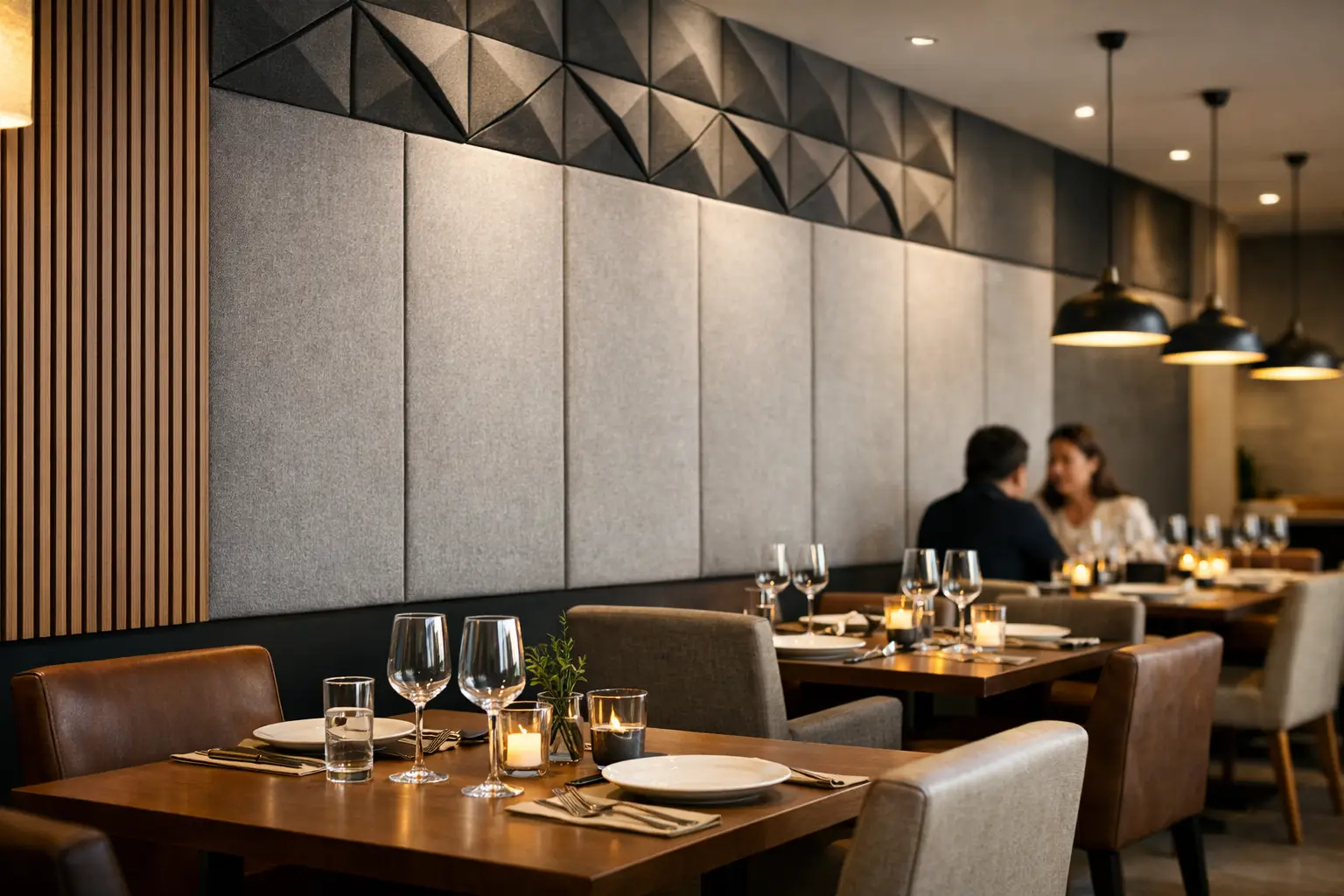
A busy dining room should feel lively, not exhausting. When every hard surface throws sound back into the space, conversation becomes work, staff strain to hear orders, and the atmosphere shifts from energetic to chaotic. That is why restaurant acoustic wall panels have become a smart design decision, not just a finishing touch.
For restaurant owners, designers, and hospitality fit-out teams, acoustics sit right at the intersection of guest comfort and visual identity. A room can look beautifully considered, but if guests lean forward all evening just to hear each other, the experience falls short. The right wall treatment helps solve that problem while adding warmth, texture, and a more refined sense of place.
Why restaurant acoustics affect more than noise
Sound shapes how people judge a space, even when they cannot explain it. In restaurants, excessive reverberation creates a subtle kind of stress. It pushes guests to speak louder, which lifts the overall volume of the room and makes the problem worse. What starts as background buzz can quickly become a space that feels crowded, sharp, and tiring.
That matters commercially. Guests tend to linger and enjoy themselves more when speech feels easy. Staff communication becomes clearer. Orders are heard more accurately. The room feels intentional rather than uncontrolled. In premium hospitality environments, those details influence the entire brand impression.
There is also a design tension many restaurants face. The finishes that look contemporary and elegant – polished concrete, glass, tile, stone, exposed ceilings – are often the same finishes that reflect sound. Minimalist interiors can be visually striking, but they need balance. Acoustic wall panels bring that balance by softening the sound profile without compromising the design direction.
What restaurant acoustic wall panels actually do
Restaurant acoustic wall panels absorb a portion of the sound energy that would otherwise bounce around the room. Instead of allowing voices, clatter, and music to ricochet off hard surfaces, the panels help reduce echo and improve speech clarity.
This does not mean a restaurant becomes silent. It should not. Good acoustics preserve atmosphere while controlling harshness. The goal is a room that still feels vibrant but no longer feels overwhelming.
The most effective solutions are the ones that combine performance with architectural presence. Slat-style acoustic panels are especially appealing in hospitality settings because they solve a practical problem while contributing texture, rhythm, and warmth. Rather than looking like a technical add-on, they become part of the interior concept.
Where acoustic panels make the biggest difference
Not every restaurant has the same acoustic challenges. A compact neighborhood bistro has different needs from a large open-plan venue, hotel dining space, or high-traffic cafe. Still, there are a few zones where wall-mounted acoustic treatment tends to have an immediate effect.
Main dining areas usually benefit first, especially where tables sit close together and parallel hard walls amplify sound reflection. Banquette seating zones are another strong opportunity, because panels can improve comfort at the very point where guests are trying to talk.
Private dining rooms often need a more controlled acoustic environment than the main floor. These spaces host business lunches, celebrations, and intimate group bookings, so speech clarity matters even more. Bar areas can also benefit, though the target there is often balance rather than maximum sound absorption.
Entry passages, waiting zones, and corridors are sometimes overlooked. Yet these transitional spaces can intensify noise if left untreated. When the acoustic experience is handled consistently, the entire venue feels calmer and more polished.
Design matters as much as performance
In hospitality interiors, a solution only works if it belongs visually. Restaurant acoustic wall panels should never feel like an afterthought. They should support the story of the space, whether that story is modern coastal, urban industrial, warm contemporary, or understated luxury.
Wood-look acoustic slat panels are particularly effective because they introduce a natural visual cadence. They soften sharper materials, add richness without visual heaviness, and create a crafted, architectural finish that suits both casual and upscale venues. The effect is practical, but it is also emotional. Guests respond to spaces that feel warm and considered.
This is where material choice becomes important. Some acoustic products solve noise well but look too corporate for hospitality. Others look beautiful but offer limited acoustic value. The strongest specification is one that achieves both. Premium finishes, consistent detailing, and a tone that complements furniture, flooring, and lighting all contribute to that result.
Choosing restaurant acoustic wall panels with confidence
A common mistake is choosing panels based only on appearance or only on technical claims. In reality, restaurants need a more balanced approach.
Start with the room itself. Ceiling height, furniture layout, floor finish, glazing, and occupancy levels all affect acoustic behavior. A restaurant with upholstered seating and layered finishes may need less intervention than a stripped-back room full of reflective surfaces. Music volume and service style matter too. A fine dining setting and a fast-paced social venue should not be treated identically.
Then consider placement. Covering every wall is rarely necessary. Strategic installation often delivers the best result. Large uninterrupted wall surfaces, seating backdrops, and echo-prone side walls usually offer the greatest return.
Maintenance is another practical factor. Restaurants need finishes that are durable, easy to maintain, and appropriate for high-traffic commercial interiors. That is one reason premium acoustic slat panels are so appealing. They offer a design-led surface that feels elevated, while remaining far more practical than traditional timber solutions that may require more upkeep.
A better guest experience is built into the walls
Acoustics are often discussed as a technical issue, but guests experience them emotionally. They notice whether a room feels easy or effortful. They notice whether a dinner feels intimate or interrupted by surrounding noise. They notice whether the setting feels premium in every sense, not just visually.
When restaurant acoustic wall panels are specified well, the improvement is subtle but powerful. Guests do not necessarily say, the reverberation time has improved. They say the restaurant feels comfortable. They stay present in the conversation. They enjoy the room for longer.
That has value beyond comfort. It shapes reviews, repeat visits, and the way people remember a venue. In hospitality, atmosphere is part of the product. Sound should support it.
Restaurant acoustic wall panels for new builds and renovations
There is no single right stage to address acoustics, although earlier is easier. In a new build or full fit-out, acoustic panels can be integrated from the start, allowing the design team to plan panel positioning, spacing, and finish coordination as part of the architectural scheme.
In renovations, they can also be a highly effective upgrade. Many restaurant owners only recognize an acoustic problem once the venue is operating. The room looks right, but the energy feels too loud and uncontrolled during peak service. Wall panels offer a targeted way to improve that without a complete redesign.
This is especially valuable for venues refreshing their identity. Acoustic slat panels can modernize a space visually while improving day-to-day performance at the same time. That combination makes them more than a decorative update.
The premium advantage of wood-look acoustic panels
There is a reason wood-inspired finishes remain so strong in hospitality design. They bring warmth, familiarity, and sophistication without feeling overly formal. In acoustic applications, they offer an elegant route to better performance.
For restaurants aiming to create a memorable interior, that matters. A flat painted wall may disappear into the background. A carefully selected slatted acoustic surface adds depth and architectural character. It can frame booths, define feature walls, soften large expanses, and help the room feel complete.
For specifiers and contractors, there is also value in choosing solutions that are designed for practical installation and consistent finish quality. Brands such as Inspiration Wood speak directly to this need by combining premium surface appeal with acoustic function and a cleaner path to transformation.
When more treatment is not always better
There is nuance here. A restaurant does not need to feel acoustically dead to feel comfortable. Too much absorption in the wrong places can flatten the atmosphere and remove some of the social energy that makes dining out enjoyable.
That is why the best approach is calibrated rather than excessive. The goal is to reduce harsh reflection and improve intelligibility while keeping the room alive. Materials, layout, occupancy, and concept all influence what that balance looks like.
Good hospitality design is rarely about extremes. It is about control, mood, and how every surface contributes to the whole experience.
If a restaurant feels beautiful but sounds tiring, the space is only doing half the job. The right acoustic wall panels allow design and performance to work together, so guests notice the warmth of the room, the ease of conversation, and the confidence of a space that has been considered from every angle.