

Blog
Why Panels Suit Kitchens With Modern Style

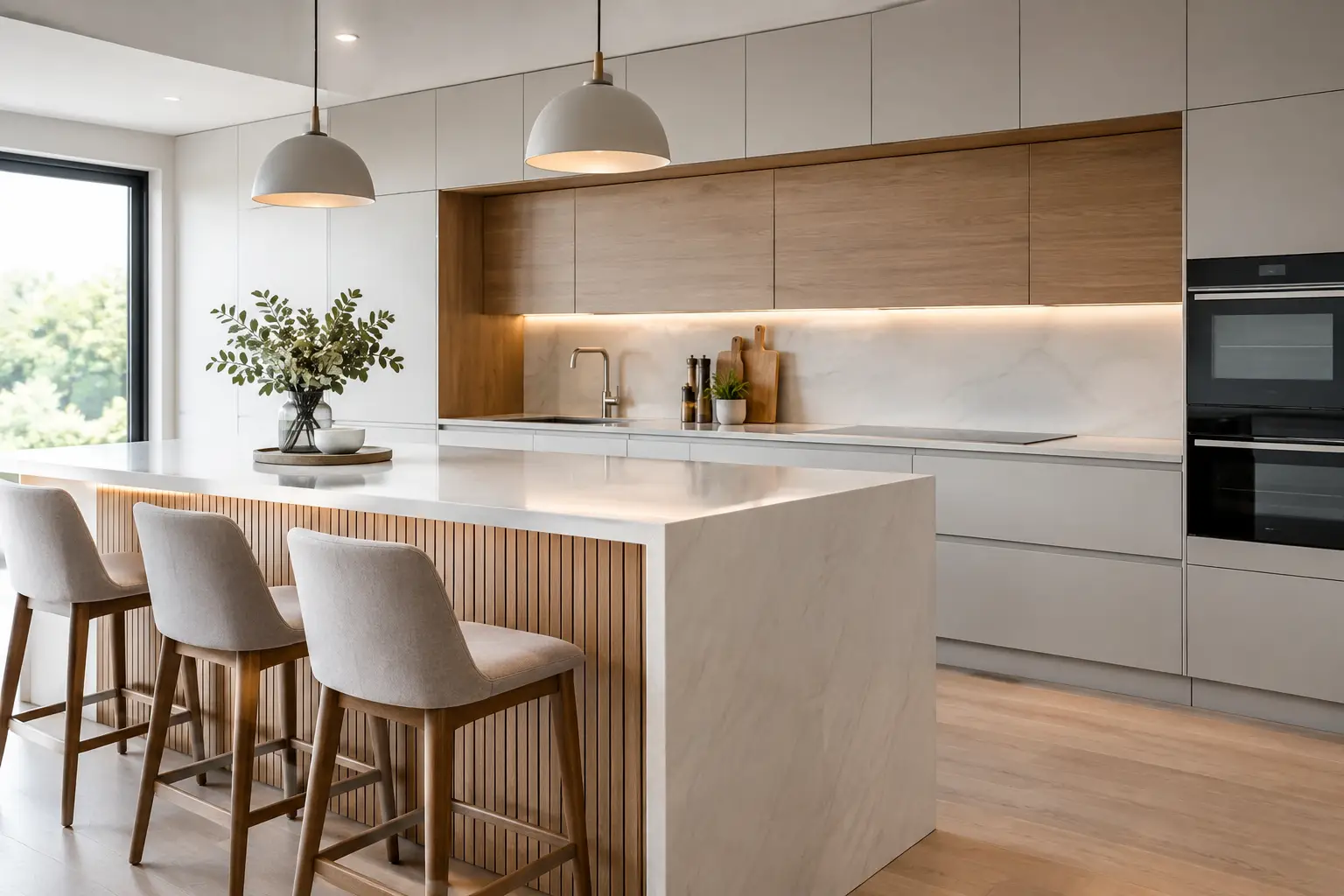
A kitchen can have beautiful cabinetry, stone countertops, and considered lighting, yet still feel cold or unfinished. The missing element is often texture. That is one reason panels suit kitchens so naturally: they introduce warmth, depth, and architectural character without asking the room to sacrifice its practical purpose.
For homeowners, designers, and hospitality spaces, wall panels offer a refined way to move beyond a plain painted wall. Used with intention, they can frame a dining nook, soften a large open-plan room, give an island backdrop greater presence, or carry a cohesive material story from the kitchen into the living area.
Why Panels Suit Kitchens So Well
Modern kitchens work harder than ever. They are cooking zones, homework stations, entertaining spaces, morning meeting rooms, and the social center of the home. A successful finish needs to look composed from every angle while standing up to daily use.
Wood-inspired panels bring a natural counterpoint to the sleek surfaces that dominate many contemporary kitchens. Matte cabinetry, polished stone, glass, and metal all benefit from the visual rhythm of slats or the tactile appeal of a carefully finished feature wall. The result can feel luxurious without becoming overly formal.
Panels also create a sense of intention. In an open-plan layout, the kitchen may flow directly into a dining or living space. Continuing a slat wall behind the dining table, around a coffee station, or onto a ceiling detail helps define zones without closing the room off. It is a sophisticated alternative to adding another wall, and it gives the interior a more complete, design-led finish.
The Acoustic Advantage in Open-Plan Kitchens
Hard surfaces are useful in a kitchen, but they can create an unforgiving acoustic environment. Stone counters, tiled floors, large windows, cabinetry, and appliances all reflect sound. Add family conversation, music, extractor fans, and the clatter of dinner preparation, and the room can quickly become louder than it needs to be.
Acoustic slat panels can make a meaningful difference when installed in the right place. Their felt backing and slatted construction help reduce reflected sound, creating a calmer atmosphere and clearer conversation. This is particularly valuable where the kitchen shares a volume with a dining room, lounge, or entertainment area.
The benefit is not silence. A kitchen should still feel lively when people gather. The goal is a room where voices are easier to hear, television sound does not compete with hard echoes, and everyday activity feels more comfortable. For a family home, a restaurant, or an office hospitality area, that improvement can change how the space is experienced.
Use panels where people gather, not where splashes land
Acoustic panels are often most effective on the wall opposite the main run of cabinetry, behind a banquette, beside a dining table, or on a ceiling section beyond the cooking zone. These locations allow the material to contribute both visually and acoustically while keeping it away from the heaviest exposure to grease, steam, and food splashes.
In a large kitchen, one considered panel installation can have more impact than covering every available wall. A feature should give the eye a place to rest. It should not compete with the cabinetry, backsplash, lighting, and appliances that already define the room.
Choosing the Right Panel Finish
The best panel finish depends on the kitchen’s light, proportions, and existing materials. Warm oak-inspired tones add softness to white, cream, charcoal, or deep green cabinetry. They work especially well when a kitchen needs more natural character but the homeowner wants to avoid the maintenance demands of traditional timber.
Darker tones can be striking in an expansive room with generous daylight. They create contrast against pale stone and lend a tailored, architectural mood to a modern kitchen. In a smaller or lower-lit space, however, a lighter wood finish may feel more open and inviting.
Look at the undertones already present. A warm beige countertop and brass hardware will usually sit more comfortably with honeyed wood tones than a cool gray finish. Black fixtures and crisp white cabinetry can accommodate a broader range, from pale oak to rich walnut-inspired panels. Bringing a sample into the room is worthwhile because daylight, under-cabinet lighting, and evening lighting can all alter how a finish reads.
Scale matters as well. Vertical slats naturally draw the eye upward, making them a strong choice where ceiling height is limited. Wider, calmer panel treatments can suit broad feature walls in larger kitchens. The design should feel proportionate to the room rather than selected in isolation.
Where Kitchen Wall Panels Work Best
A panel application is strongest when it has a clear role. Behind a breakfast table, it can make a simple dining corner feel deliberately designed. Along the outside face of a kitchen island, it adds texture to what might otherwise be a large, flat expanse. On the wall leading from the kitchen to the living room, it can create visual continuity across an open-plan interior.
Ceilings are another opportunity, especially in homes with an island or a generous entertaining area. A slatted ceiling feature above a dining table can visually anchor the zone and add a quiet sense of luxury. It should be planned around lighting, access points, and ventilation so that the finished result remains clean and functional.
For commercial kitchens and hospitality spaces, panels are particularly effective in customer-facing areas rather than behind the line. A restaurant breakfast nook, café counter surround, hotel lounge kitchen, or office refreshment zone can benefit from warmth and acoustic comfort while retaining the durable, easy-to-maintain finishes required in working areas.
Practical Considerations Before Installation
Not every wall in a kitchen should be paneled. The wall directly behind a cooktop, for example, needs a finish designed for heat, grease, and frequent cleaning. A proper backsplash remains the sensible choice in this high-exposure zone. Likewise, areas immediately beside a sink need careful consideration because repeated splashing can affect finishes that are not intended for constant water contact.
Panels are best treated as an architectural finish, not a substitute for purpose-built wet-area protection. Keep them clear of direct flame, ensure adequate spacing from heat sources, and follow the product’s installation and safety guidance. If you are working around gas appliances, electrical outlets, or extractor systems, use qualified tradespeople to plan the detailing correctly.
Ventilation also matters. A good extractor fan reduces airborne moisture and cooking residue, protecting cabinetry, paint, and decorative finishes throughout the room. Regularly wiping down nearby surfaces and addressing splashes promptly will help preserve their appearance.
Installation details separate a polished result from an improvised one. Plan where panels begin and end, how they meet cabinetry, and whether trims, corner edges, or end slats are needed. These finishing components create a crisp transition and make the feature look integrated rather than simply applied to the wall.
Pairing Panels With a Kitchen Style
In a minimalist kitchen, panels can introduce the texture that flat cabinetry deliberately avoids. Keep the palette restrained and let the repeated slat pattern do the work. In a more classic kitchen, a warm panel finish can complement shaker-style doors, natural stone, and aged metal accents without making the scheme feel dated.
For contemporary coastal interiors, lighter wood-inspired finishes bring an easy, relaxed warmth alongside pale cabinetry and soft neutral surfaces. In urban apartments, darker panels, black details, and muted stone can create a more dramatic look, especially when balanced with layered lighting.
The strongest kitchens do not rely on one statement material alone. They combine contrast thoughtfully: smooth with textured, light with dark, practical with expressive. Panels give designers and homeowners a way to introduce that contrast while maintaining a coherent, premium feel.
A kitchen should support the realities of daily life, but it can still feel extraordinary. Select panels for the right wall, respect the demands of heat and moisture, and let natural texture bring a more welcoming rhythm to the room.