

Blog
Hotel Lobby Wall Paneling That Sets the Tone

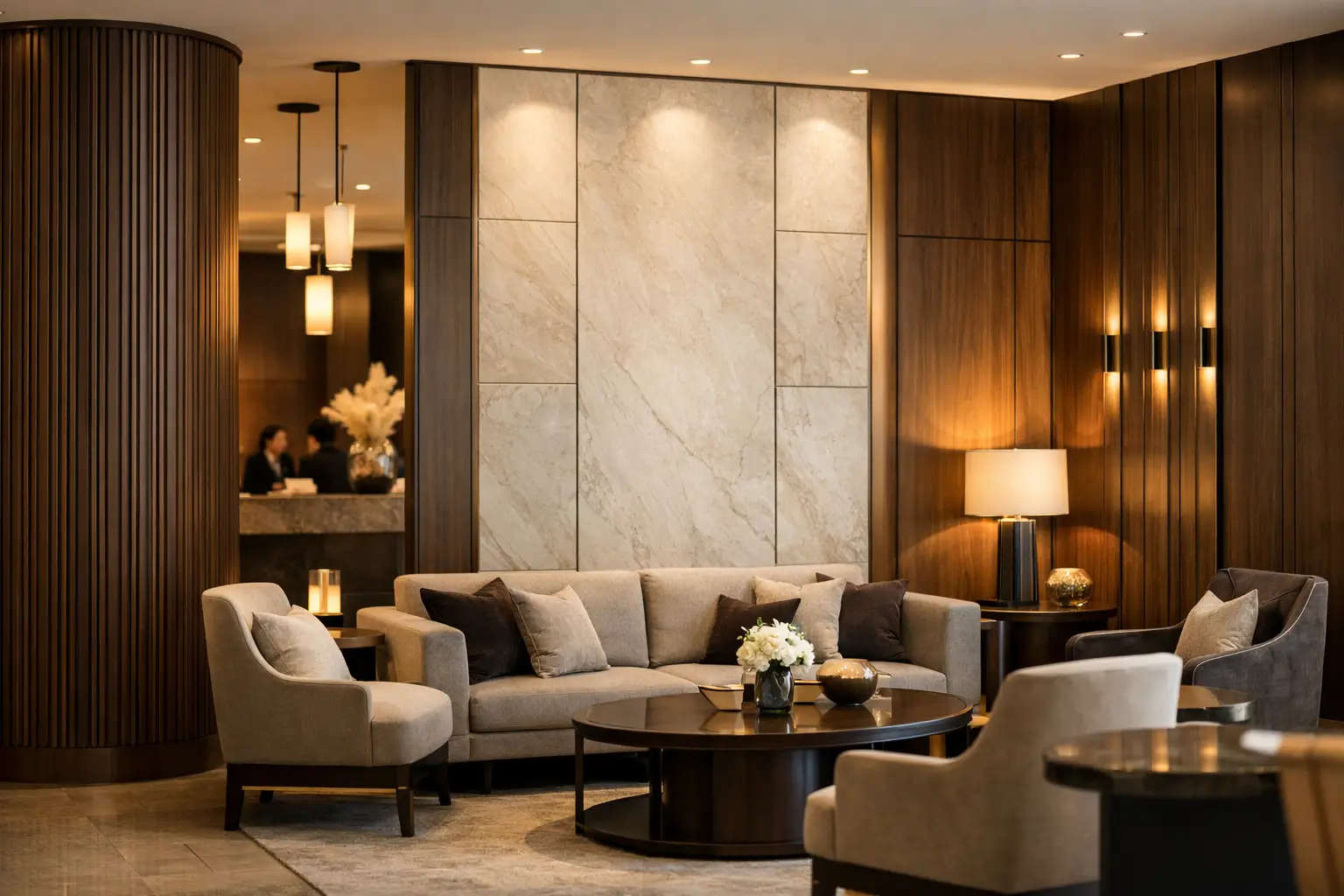
A hotel lobby starts speaking before the receptionist does. Guests notice the mood, the noise level, the lighting, and the finishes within seconds, which is why hotel lobby wall paneling matters far beyond decoration. The right paneling can make a lobby feel calm, elevated, and memorable while also helping the space handle daily traffic, rolling luggage, and constant use.
For hotel owners, designers, and specifiers, that makes wall paneling a design decision with operational consequences. It influences acoustics, maintenance schedules, brand perception, and how comfortably a space moves from morning check-ins to evening social activity. When the finish is chosen well, it does more than look refined. It works hard in the background every day.
Why hotel lobby wall paneling matters so much
The lobby has one job that sounds simple and is actually demanding: it needs to welcome everyone. That includes tired travelers, business guests, families, event attendees, and visitors who may spend only a few minutes in the space but leave with a strong impression of the property. Blank painted walls rarely carry that responsibility well.
Wall paneling adds depth, texture, and intention. It gives a lobby visual structure and can turn an ordinary reception wall, waiting area, or double-volume entrance into a designed experience. Natural wood-inspired finishes are especially effective because they soften the commercial feel that many hospitality spaces struggle with. They introduce warmth without making the environment feel heavy or outdated.
There is also the acoustic side of the equation. Lobbies are rarely quiet. Hard floors, glass, stone counters, and open-plan seating all contribute to echo. In that setting, decorative surfaces that also support sound control become particularly valuable. Guests may not identify the source, but they immediately feel the difference between a lobby that sounds harsh and one that feels composed.
What great lobby paneling needs to do
A beautiful surface is only the starting point. In hospitality, finishes have to perform under pressure. Hotel lobby wall paneling should hold its visual quality in a public-facing environment while staying practical to maintain.
Durability comes first. Reception backdrops, corridor transitions, lift lobbies, and waiting zones all experience frequent contact. Scuffs, knocks, and surface wear can quickly make a premium space look tired. A paneling system should be specified with this reality in mind, especially at lower wall levels and along circulation paths.
Maintenance is just as important. Traditional timber has undeniable appeal, but it often asks more from a property team in terms of care, refinishing, and long-term consistency. Many hospitality projects now favor modern wood-look wall solutions because they deliver a similar richness with less upkeep. That shift is not about compromising on aesthetics. It is about making better operational sense.
Installation also deserves attention early in the process. Hotels often renovate in phases, and downtime is expensive. Systems that are cleaner and faster to install can make a meaningful difference, particularly in refurbishment projects where the site must remain partially active.
The design role of hotel lobby wall paneling
Paneling should not be treated as an afterthought applied to a wall that feels empty. In a strong hospitality scheme, it helps define the identity of the lobby itself.
Vertical slatted paneling, for example, creates rhythm and height. It can visually lift lower ceilings, frame a reception desk, or add elegance to a narrow entrance. Wider, more continuous panel profiles tend to feel calmer and more architectural, which suits hotels aiming for a quieter, understated kind of luxury. V-groove styles can introduce detail without visual noise, making them useful where the overall interior palette is already layered.
Tone matters as much as profile. Lighter wood finishes create openness and a fresh, contemporary feel. Deeper walnut-inspired tones often bring a sense of intimacy and richness, especially when paired with warm lighting, matte metals, and stone surfaces. Neither is universally better. The right choice depends on brand positioning, natural light levels, and how the lobby is used throughout the day.
There is a balance to strike here. Too little texture and the lobby can feel flat. Too much and it starts competing with furniture, artwork, signage, and guest movement. The most successful schemes use paneling to anchor key moments rather than cover every vertical surface.
Where paneling has the biggest impact
Reception areas are the obvious focal point, and for good reason. The wall behind the front desk often appears in guest photos, brand imagery, and first impressions. A well-detailed panel finish instantly upgrades this zone and gives the desk a stronger architectural presence.
Feature walls in lounge seating areas are another smart application. They help define smaller pockets within a larger lobby, which is especially useful in mixed-use hospitality spaces where guests may work, wait, meet, or relax in the same environment. Paneling can create a feeling of intimacy without the need for physical dividers.
Elevator lobbies and transition spaces are often overlooked, yet they play a major role in perceived quality. Carrying a consistent wall finish into these areas creates cohesion and makes the guest journey feel considered from arrival to room access.
In larger properties, paneling can also be used on columns, partial-height wall sections, and ceiling drops to tie the scheme together. The key is restraint. Repetition builds identity, but overuse can reduce the impact of the material.
Acoustic benefits guests can actually feel
One of the strongest arguments for acoustic slat solutions in hospitality is that they improve the atmosphere without announcing themselves as acoustic treatment. That is a significant advantage in a lobby, where technical interventions need to feel integrated rather than obvious.
Speech clarity matters at reception. Guests do not want to strain to hear check-in details over background chatter, luggage wheels, and music. Acoustic wall paneling can help reduce reverberation, making conversations easier and more comfortable. The result is not silence. It is control.
This becomes even more valuable in boutique hotels and upscale properties where the lobby often functions as a social hub. Coffee meetings, informal work sessions, and evening drinks all place acoustic demands on the same space. A finish that contributes to both ambience and sound moderation supports the lobby across multiple uses.
Choosing materials for style and practicality
The most effective hospitality materials look premium up close and remain dependable over time. That is why many specifiers are moving toward engineered panel systems instead of relying solely on traditional timber joinery.
Wood-inspired acoustic slat panels bring a particularly strong combination of qualities. They offer warmth, texture, and a contemporary architectural look while supporting sound absorption. They also suit the pace of modern fit-outs, where consistency, ease of handling, and installation efficiency matter.
This is where product selection becomes strategic. Surface finish, backing material, edge detailing, trim compatibility, and color consistency all affect the final result. A panel can look excellent in a sample and still fail visually if the accessories and transitions are not properly considered.
For projects that need a polished finish with fewer complications, systems with coordinated trims, corner edges, and matching end details help keep the design sharp. That level of completeness often distinguishes a merely good installation from one that feels genuinely premium.
Common mistakes to avoid
The first mistake is choosing hotel lobby wall paneling only by appearance. Hospitality spaces are demanding, and a finish that looks striking in a showroom may not be the right answer for heavy public use.
The second is ignoring lighting. Wood tones shift dramatically under warm or cool light, and slatted surfaces create shadow lines that can either enhance the design or make it feel visually busy. Testing the finish under realistic lighting conditions is worth the effort.
A third misstep is failing to think about proportion. Very narrow slats on a large wall can look fussy from a distance, while oversized profiles may feel too heavy in a compact lobby. The panel scale should relate to the architecture, not just the sample board.
Finally, paneling should work with the broader brand story. A business hotel, a coastal retreat, and a luxury urban property may all use wood-inspired finishes, but they should not use them in the same way. The surface has to reflect the guest experience the hotel is trying to create.
A better standard for hospitality interiors
The best hotel lobbies do not rely on one dramatic gesture. They succeed because every element supports the same feeling. Wall paneling plays a quiet but powerful role in that equation, bringing warmth, texture, acoustic comfort, and visual confidence to the space guests encounter first.
For hotels aiming to create a polished arrival experience without inviting unnecessary maintenance, modern panel solutions offer a compelling path. Brands such as Inspiration Wood reflect this shift well, pairing premium wood-inspired aesthetics with practical performance and install-ready detailing. When the material is chosen with both design and operations in mind, the lobby begins to feel less like a pass-through and more like a destination in its own right.
A guest may not remember the exact panel profile on the wall, but they will remember how the space made them feel the moment they walked in.