

Blog
Best Panels for Media Rooms That Feel Cinematic

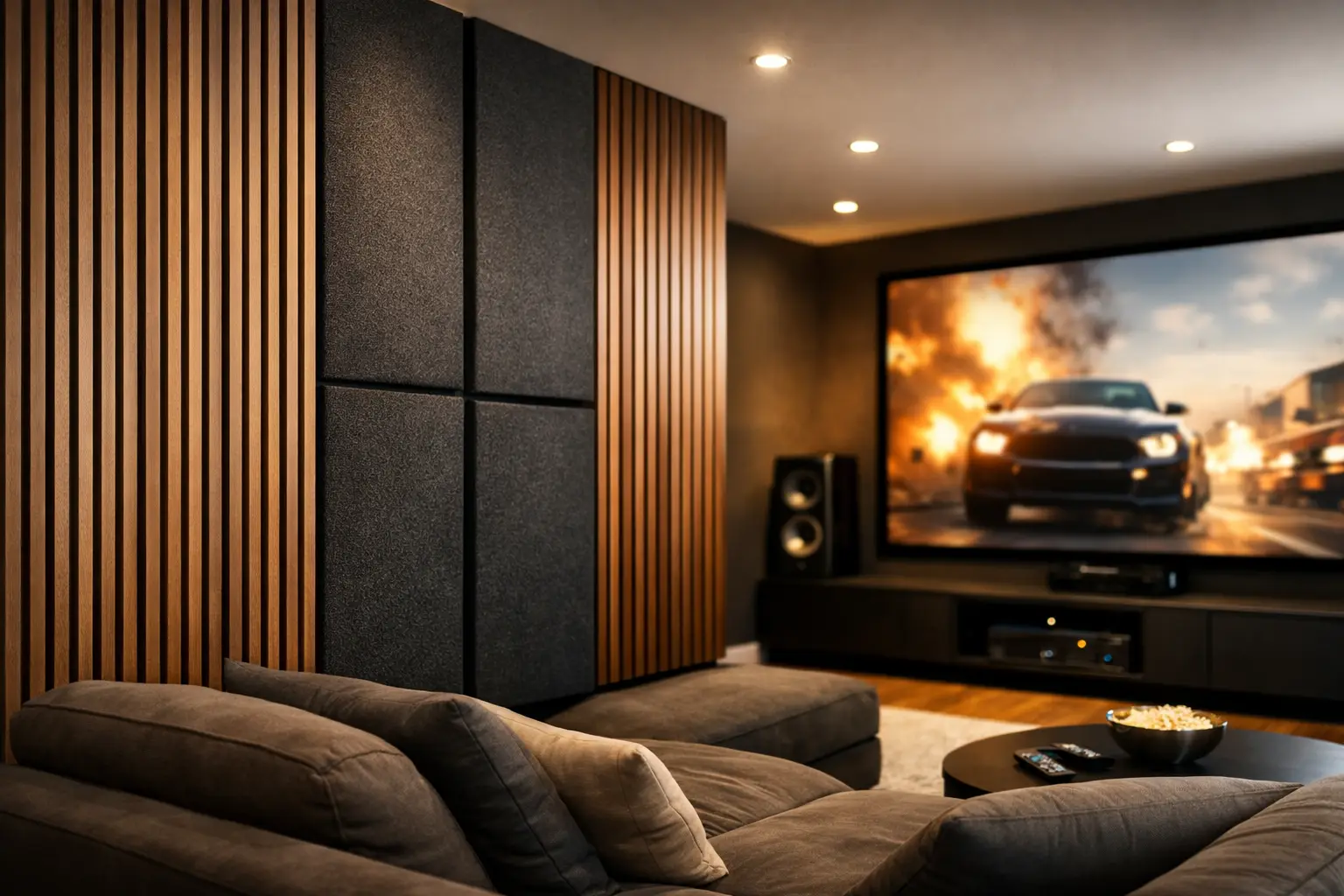
A media room should let the soundtrack breathe, dialogue land clearly, and the screen hold your attention without the space feeling cold or over-engineered. The best panels for media rooms do more than decorate a wall behind the television. They help shape a more composed acoustic environment while bringing the warmth, depth, and architectural detail that turn an ordinary entertainment area into a true retreat.
For homeowners, designers, and hospitality professionals, the right choice comes down to balancing sound control with the character of the room. A panel that looks beautiful but does little for echo may not solve the real problem. Equally, a highly technical acoustic finish can feel out of place in a refined living space. The most successful media rooms make both considerations work together.
What media room panels need to achieve
Media rooms have a particular acoustic challenge. Hard surfaces such as glass, tile, concrete, painted walls, and large television screens reflect sound. That reflection can create a bright, busy room where voices compete with music and action scenes lose their definition. The issue is especially noticeable in open-plan homes, where sound has fewer boundaries and more surfaces to travel across.
Acoustic wall panels absorb a portion of those reflections. This reduces reverberation, the lingering bounce of sound after it leaves the speaker, so speech becomes easier to follow and the room feels less harsh at higher volumes. They will not make a room completely soundproof, and they cannot replace specialist sound isolation where that is required. But they can make a meaningful difference to comfort and clarity inside the room.
Visually, panels also have an important role. A media wall is often the focal point of the space, even when the television is switched off. Its finish needs enough presence to frame the screen without competing with it. Linear texture, dark or natural wood tones, and thoughtful lighting can give the room a tailored, immersive atmosphere.
The best panels for media rooms: acoustic slat wood panels
For most contemporary media rooms, acoustic slat wood panels offer the strongest blend of visual impact and practical performance. They pair narrow wood-look slats with an acoustic felt backing, creating a layered surface that softens reflected sound while adding warmth and dimension.
The rhythm of the slats naturally suits a media wall. Vertical installation can make a lower ceiling feel taller, while horizontal installation can visually widen a compact room. Behind a screen, the paneling creates a deliberate backdrop that conceals visual clutter and gives mounted equipment a more integrated appearance.
This option is particularly effective in living rooms that serve more than one purpose. Unlike a dedicated theater with blackout finishes and heavily treated walls, a family media room still needs to feel welcoming in daylight. Wood-look slats retain that residential elegance. They introduce the character of timber without the uneven aging, refinishing demands, or installation complexity associated with conventional solid wood cladding.
At Inspiration Wood, acoustic slat finishes are designed for this intersection of elevated interiors and everyday usability. The result is a surface treatment that feels considered enough for a feature wall, yet practical enough for a room used for movies, gaming, sport, and relaxed family time.
Why felt-backed slat panels work well
The felt backing is central to the acoustic benefit. It helps absorb sound energy that would otherwise reflect from a flat wall, while the spacing between slats adds texture and breaks up the visual plane. In a room with excessive echo, this can make conversations sound more natural and reduce the sharpness that makes a soundtrack feel fatiguing.
The effect depends on the room. Panel coverage, ceiling height, flooring, soft furnishings, speaker placement, and wall construction all influence the outcome. A media room with full-height glass and polished concrete will generally need more acoustic treatment than one with curtains, rugs, upholstered seating, and a lower ceiling.
Slat panels are therefore best viewed as a powerful part of an overall acoustic strategy, not a single cure for every sound issue. That distinction matters when expectations are high.
Choosing the right finish for the screen wall
Dark finishes are often the natural choice behind a television or projection screen because they minimize visual distraction. Charcoal, deep walnut, smoked oak, and black-toned details can make the screen appear more defined, especially in a room intended for evening viewing. They also pair well with black hardware, concealed speakers, and low-glare lighting.
A lighter oak or soft natural finish can be equally effective in a bright, modern family room. It creates a relaxed, Scandinavian-inspired look and prevents the media zone from feeling too enclosed. Here, the key is contrast. Choose a television surround, cabinetry, or paint color that gives the screen a clear visual boundary.
Consider the panel finish alongside the floor and joinery rather than in isolation. If the room already has timber flooring, a closely matching panel can create a calm, cohesive envelope. A contrasting tone, on the other hand, can turn the media wall into a confident architectural feature. Neither approach is automatically better. Matching feels understated; contrast feels more expressive.
Avoid overly glossy surfaces
High-gloss finishes, glass panels, and highly reflective paint can catch light from windows, lamps, or the screen itself. In a media room, that glare interrupts viewing comfort and makes the wall visually active when it should feel grounding. Matte wood-look slats and acoustic felt are better suited to controlling reflected light as well as reflected sound.
Where to place acoustic panels for the greatest impact
The wall behind the television is the most popular location, and for good reason. It anchors the room visually and offers generous surface area for an uninterrupted installation. Full-height panels can make the treatment feel built in, while a centered panel section works well where cabinetry, floating shelves, or a fireplace share the wall.
However, the wall behind the screen is not always where sound reflections are most noticeable. In speaker-led home theater setups, the side walls can be highly influential because sound reaches them early and reflects toward the seating position. Adding panels to one or both side walls may improve listening comfort more than treating only the front wall.
For a balanced look, use the screen wall as the visual centerpiece and extend panels selectively to the sides. This might mean a full media wall with narrower acoustic sections beside the sofa or within a reading nook. In larger spaces, a slatted ceiling feature can also help soften the room while creating a striking sense of enclosure above the seating zone.
Do not treat every surface automatically. Too much of one finish can make a room feel visually heavy, particularly in smaller spaces. A rug, curtains, upholstered furniture, and acoustic panels can work together, allowing each element to do its part without overwhelming the design.
Installation details that protect the finished look
A premium media wall relies on precision. Plan the television position, electrical outlets, data points, speaker cables, and any LED lighting before panels are installed. A professional-looking result depends on avoiding exposed cords and awkward cutouts around brackets or cabinetry.
Where a television will be wall-mounted, confirm that the structure behind the panels can safely support its weight. Panels are a finish, not a substitute for proper fixing into suitable wall framing or masonry. If the television is large, allow for ventilation around the unit and ensure any recessed niche is designed to the manufacturer’s clearance requirements.
Trims, corner edges, and end slats are not minor extras. They provide the crisp transitions that distinguish a completed architectural finish from an unfinished cladding project. They are especially valuable where panels meet painted walls, cabinets, door frames, or outside corners.
Lighting deserves the same attention. Warm, dimmable LED strips can wash softly across the slats and emphasize their depth without creating screen glare. Place lighting to the side, below, or behind cabinetry rather than directly above the viewing position. The aim is atmosphere, not brightness.
When to add more specialized acoustic treatment
Acoustic slat panels are ideal when the goal is to improve a room’s everyday sound and elevate its design. Yet a dedicated cinema room with powerful subwoofers, multiple speakers, or demanding sound isolation goals may need more. Low-frequency bass is difficult to control with decorative wall panels alone, and sound traveling into neighboring bedrooms or apartments requires work within walls, ceilings, doors, and ventilation paths.
In these cases, combine decorative panels with advice from an acoustic or home theater professional. They may recommend bass traps, additional absorption at key reflection points, insulation, or construction changes. This approach allows the room to keep its polished residential character while addressing the technical demands of a serious audio system.
The right media room panels should make the space feel quieter in character, richer in texture, and more inviting when the lights go down. Start with the surfaces your eyes and ears notice first, then build the room around the experience you want every viewing night to deliver.