

Blog
Why Weather Resistant Wood Look Panels Work

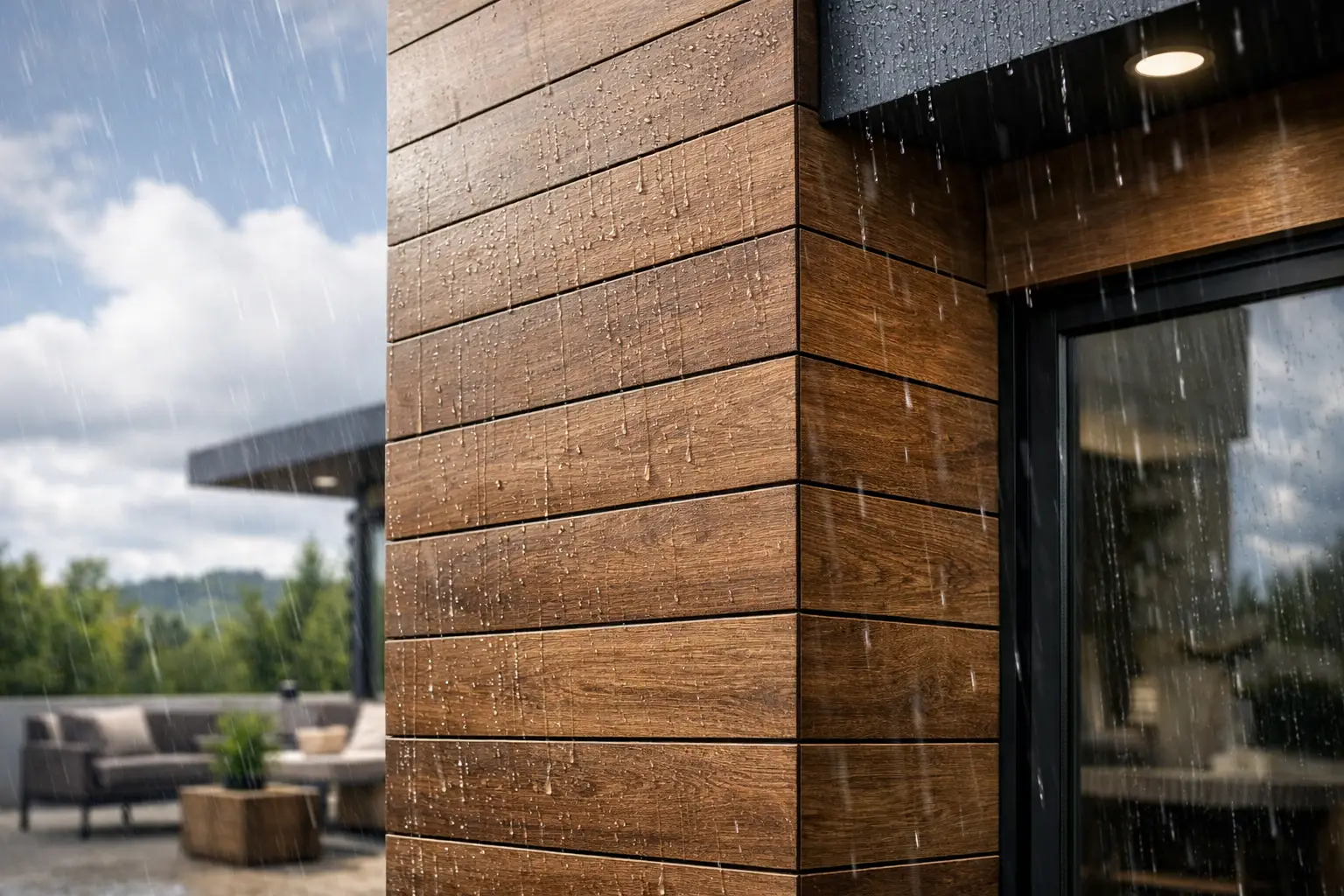
A sun-struck patio, a poolside privacy wall, a restaurant facade that faces wind and rain every season – these are the places where good design is tested. Weather resistant wood look panels have become a smart choice for projects that want the warmth of timber without the swelling, fading, staining, and constant upkeep that often come with real wood outdoors.
For homeowners and design professionals alike, the appeal is easy to understand. The right panel brings visual softness to hard architectural lines, adds texture to exterior walls and ceilings, and creates a more refined finish across residential and commercial spaces. Just as importantly, it holds that finish in conditions where traditional timber can become demanding.
What weather resistant wood look panels actually solve
Outdoor surfaces ask for more than appearance. They need to cope with UV exposure, moisture, changing temperatures, dust, and everyday wear. On a design board, timber is often the ideal reference point because it feels natural, elevated, and timeless. On site, though, it can become a maintenance story.
That is where weather resistant wood look panels stand apart. They are designed to deliver the visual character of wood grain and slatted detailing while offering a more stable, lower-maintenance exterior solution. For many projects, that means less sanding, less sealing, and fewer callbacks.
This matters in practical terms. A homeowner wants an outdoor entertainment area that still looks polished after a long summer. A hospitality owner wants exterior finishes that support the brand experience without creating a maintenance schedule every few months. An architect wants material consistency across a facade without the unpredictability of natural movement in solid timber. In each case, the panel is doing more than decorating a surface. It is reducing friction between design ambition and real-life use.
Why weather resistant wood look panels suit modern exteriors
Contemporary spaces often rely on contrast – smooth render against textured cladding, concrete against warm wood tones, glass against linear detailing. Wood-look panels fit naturally into that language. They soften minimal architecture and bring depth to surfaces that might otherwise feel flat.
The benefit is not only aesthetic. Exterior-grade wood-look panel systems are typically chosen because they balance appearance with performance. Depending on the system, they may resist moisture more effectively than natural timber, require less ongoing treatment, and maintain a more consistent finish over time.
That said, not every panel belongs in every setting. A covered patio has different demands from a fully exposed perimeter wall. A coastal project may need stronger consideration for salt air and fasteners. A high-traffic commercial entry may call for tougher impact resistance than a private residential screen. Good specification always starts with the exact environment, not just the look.
The visual advantage of wood without the fragility
Real wood ages beautifully in some applications, but only if the owner is willing to care for it. Many are not. They want the richness of grain and the calm, architectural feel of slatted surfaces, but they do not want cracking, warping, or repeated refinishing to be part of the package.
A well-made wood-look panel gives you that visual warmth in a more controlled format. The finish is more consistent. The tones are more predictable across a larger installation. For designers, that can be a real advantage when a project depends on clean lines and uniformity.
Where these panels make the biggest impact
Some materials look good in a sample and underperform across a full project. Weather resistant wood look panels tend to have the opposite effect when specified well. They often become more convincing once installed over a broader surface because the rhythm, texture, and depth start to shape the whole space.
Exterior feature walls are one of the strongest applications. They turn blank facades into intentional design elements and can elevate relatively simple architecture with minimal visual clutter. Outdoor ceilings are another smart use, especially in covered patios, entrance canopies, and entertainment areas where warmth overhead changes the atmosphere immediately.
Privacy screens and garden enclosures also benefit. These spaces need durability, but they should still feel designed rather than purely functional. In hospitality and retail settings, the same principle applies. A wood-look exterior surface can make a venue feel more premium, more welcoming, and more memorable from the street.
Residential and commercial projects benefit differently
In homes, the decision is often emotional first and practical second. People want an outdoor area that feels calmer, more finished, and more connected to the interior palette. The low-maintenance benefit becomes the reassurance that justifies the design choice.
In commercial work, practicality tends to lead. Durability, speed of installation, consistency of finish, and long-term appearance matter because they affect operating costs and brand presentation. The aesthetic value is still central, but it needs to work harder.
What to look for before you choose a panel
Not all exterior wood-look products deliver the same result. Some are better for decorative cladding in protected areas. Others are engineered for more demanding exposure. Before choosing, it is worth looking beyond the headline promise of weather resistance.
Material composition matters. Composite-based systems are often chosen because they combine wood-inspired aesthetics with improved durability and lower maintenance. Surface finish matters too, especially for UV stability and color retention. The quality of trims, corner details, and edge solutions should not be treated as an afterthought. A premium panel can lose its impact quickly if the finishing components are weak or visually clumsy.
Installation method is another key consideration. Some systems are designed to make installation cleaner and more efficient, which can save time on site and improve the final result. For contractors and shopfitters, that has obvious value. For homeowners, it usually translates to a smoother project with fewer visible compromises.
Then there is maintenance. Low maintenance does not mean no maintenance. Outdoor surfaces still collect dust, pollen, and residue. The real advantage is that cleaning is typically simpler and less frequent than with traditional timber. That difference becomes more meaningful over the years, not just in the first season.
The trade-off question: when real wood still makes sense
There are projects where authentic timber is still the right call. If the brief depends on natural variation, handcrafted aging, or a material story rooted in genuine wood species, then composite or wood-look alternatives may not fully replace it. Some luxury projects want that irregularity and are happy to invest in the upkeep.
But many clients are not choosing between two equal maintenance paths. They are choosing between a beautiful finish they can realistically live with and one that becomes a burden. That is why weather resistant wood look panels have found such a strong place in modern design. They respect the look people want while responding to the way people actually use spaces.
For residential upgrades, that can mean creating an outdoor feature that stays attractive with far less effort. For commercial environments, it can mean delivering a polished brand-facing finish that performs under daily use. For designers, it opens up a broader material palette without compromising the practical demands of the brief.
Why the best results come from thinking beyond the panel
A panel is rarely the full story. The most compelling spaces use it as part of a complete surface strategy. Tone, spacing, trim details, lighting, adjacent materials, and installation direction all influence the final effect. A warm walnut-look finish can feel dramatic and luxurious on a restaurant facade, while a lighter oak tone may bring a calmer, more expansive feel to a residential courtyard.
Scale matters as well. Vertical lines can heighten a wall and create a sharper architectural rhythm. Horizontal applications may feel more relaxed and expansive. Matching or contrasting the panel tone with doors, flooring, planters, and metal finishes can either create cohesion or a more layered, editorial look.
This is where a specialist product range becomes valuable. Inspiration Wood, for example, positions these solutions not as generic cladding, but as design-led systems that help shape extraordinary spaces with a more refined finish. That difference is felt in the details.
When you are selecting materials for an exterior, the best question is not simply whether a product can survive the weather. It is whether it can keep a space looking considered, elevated, and easy to live with long after installation day.